Rounding edges with deburring machines

WEBER deburring machines
for precise edge rounding
for the highest standards
Das Wichtigste
Edge rounding through innovative sanding technology
Edge rounding is an important step when simple deburring is no longer sufficient. Unlike basic edge breaking, edge rounding creates a defined and consistent radius along the cut edge, improving both the quality and functionality of the workpiece.
Precise edge rounding is used across a wide range of industries, including automotive, aerospace, electronics, medical technology, and general metalworking. Consistent rounded edges can improve subsequent processes such as painting, powder coating, and electroplating while helping to reduce sharp edges and improve workplace safety.
WEBER sanding technology provides the precision, flexibility, and efficiency required to achieve consistent edge radii for demanding industrial applications.
WEBER technology
Whether metal parts are produced by punching, shearing, or laser cutting, reliable deburring is essential for efficient downstream processing. WEBER deburring machines provide the precision, performance, and consistency required to remove burrs effectively and prepare parts for the next production step.
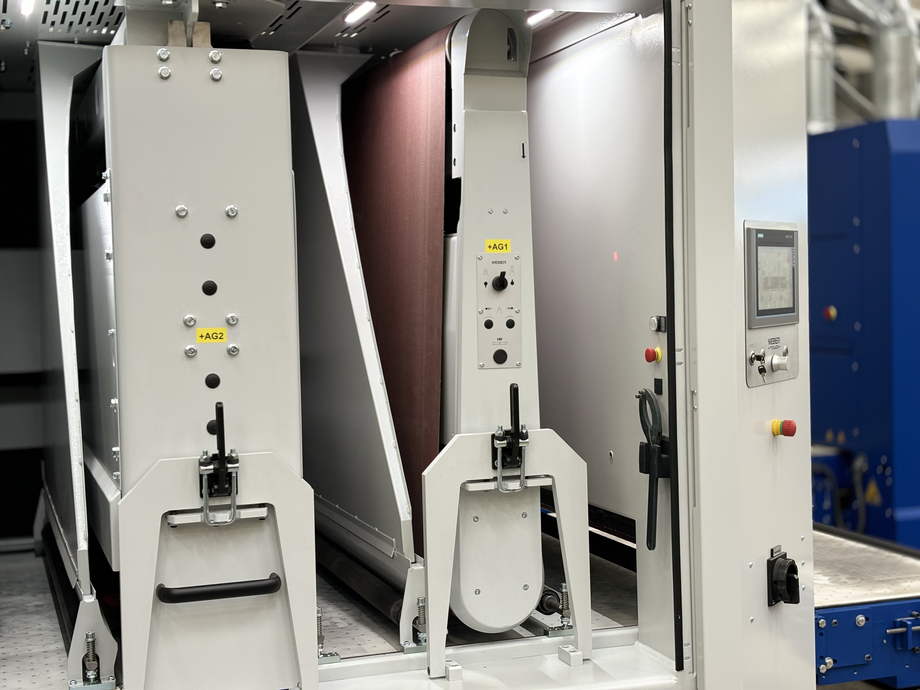
The contact roller plays a key role at the beginning of the deburring process, providing controlled and consistent material removal along the edges. It is particularly effective for pre-grinding and can efficiently remove heavy burrs and even thick, melted laser spatter.
The contact roller is precisely controlled and can be positioned below the zero line to adjust the sanding pressure according to the workpiece and application. The abrasive belt is pressed against the material by the roller, ensuring efficient and uniform processing.
WEBER offers a range of rubberized contact rollers with different hardness levels, diameters, and configurations to meet the specific requirements of various metalworking applications.
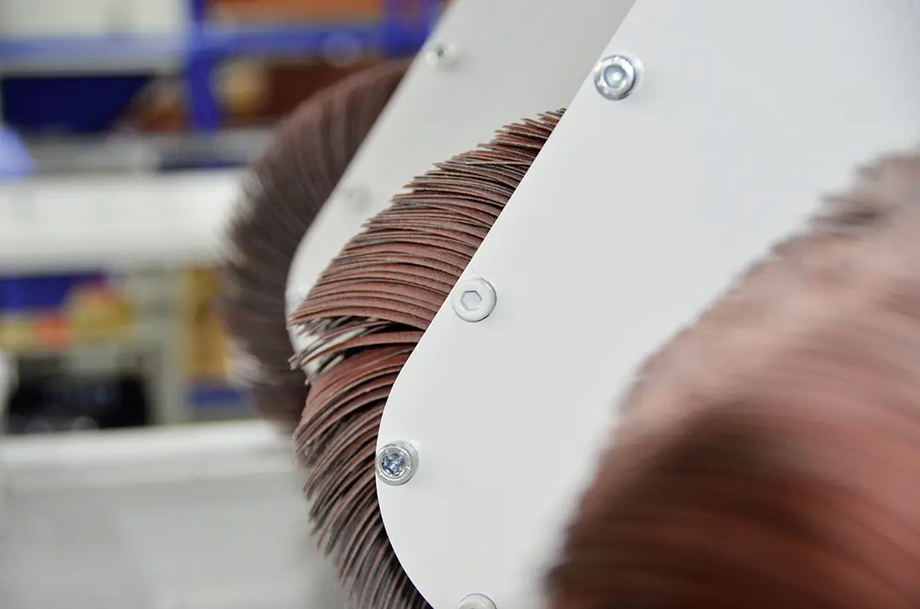
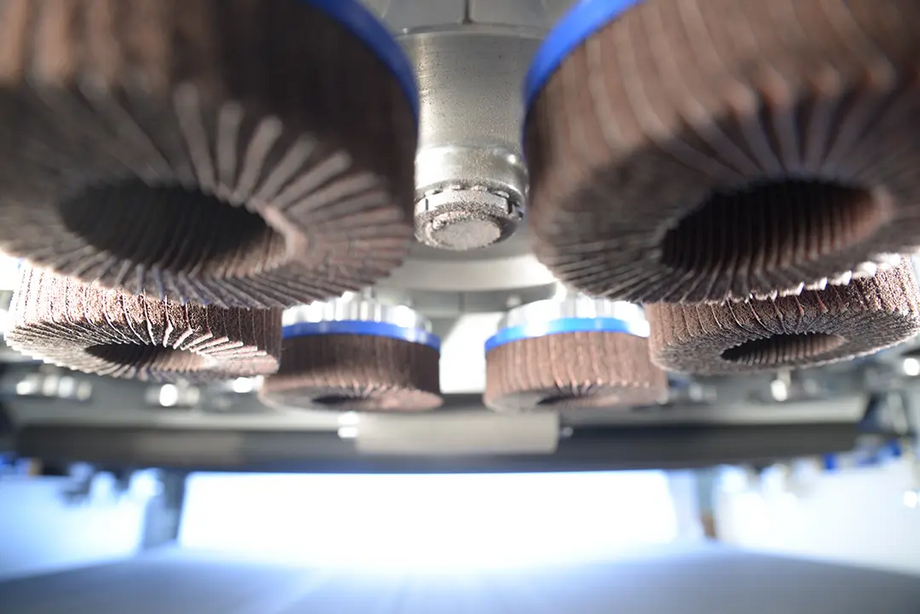
The WEBER MRB brushing system provides precise and consistent edge rounding for a wide range of materials and part geometries. Multiple rotating brush heads ensure uniform results across the entire working width, while two brushes per head provide reliable processing even for thin materials down to 1 mm.
The system is particularly effective for three-dimensional parts, including louvers, thread pull-throughs, and formed components. Its gentle brushing action creates consistent radii without damaging sensitive surfaces such as foiled, galvanized, or hot-dip aluminized sheet metal – even at material thicknesses below 1.2 mm.
The multi-rotation brush technology processes edges from bottom to top, combining gentle handling with high efficiency and consistent edge quality.
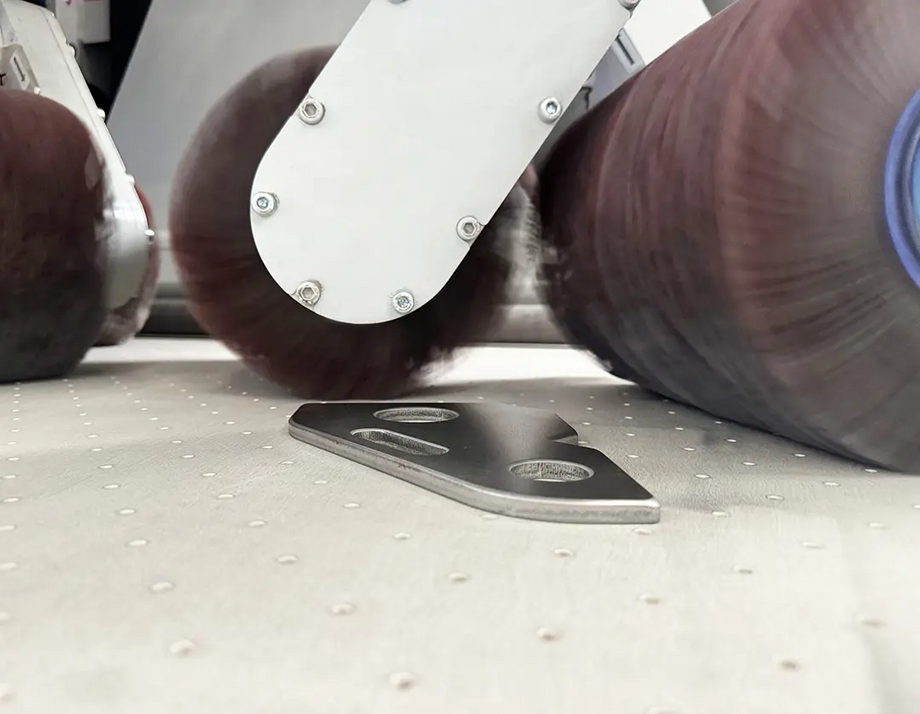
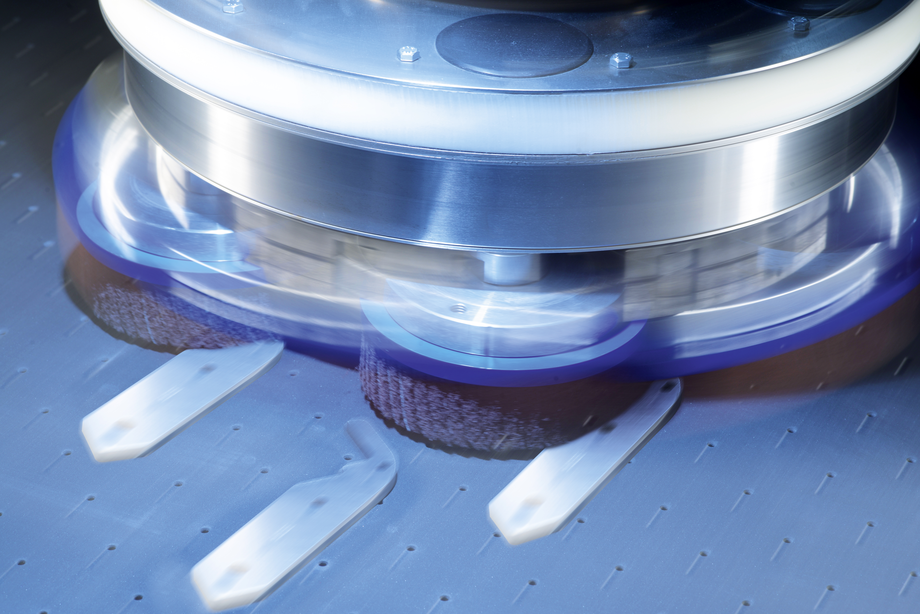
The WEBER P6 and P2 planetary head systems deliver precise and consistent edge rounding on both inner and outer contours. Their unique dual rotary movement ensures uniform processing and consistently high-quality results.
The patented P2 system uses overlapping planetary heads to eliminate unprocessed areas while reducing abrasive wear. A wide speed range allows the use of various grinding tools, while sealed and lubricated planetary heads ensure reliable, low-maintenance operation.
Automatic tool length measurement enables fast and precise adjustments for consistently accurate edge rounding.
Discover our metal technology for edge rounding
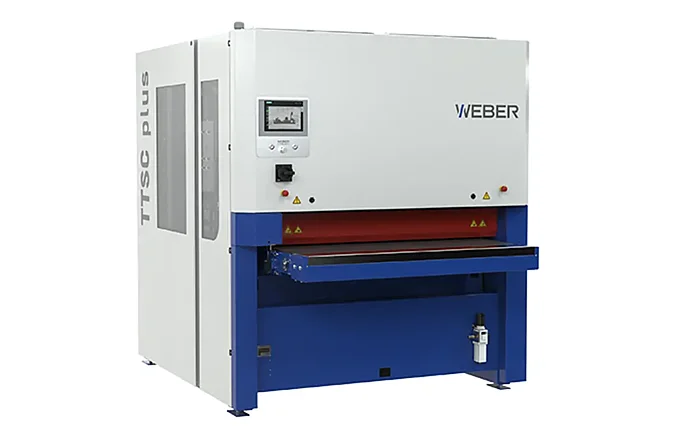
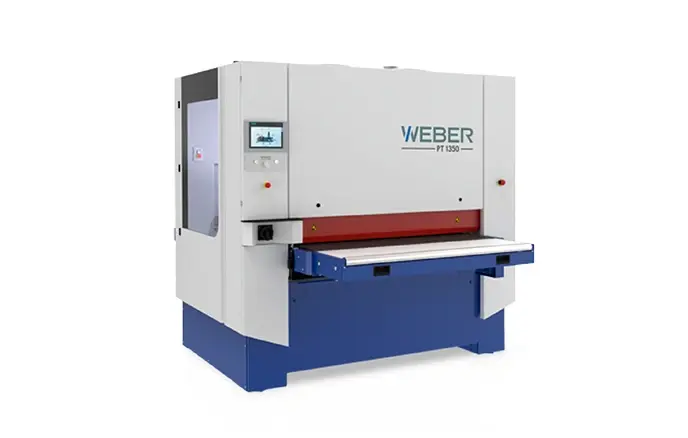


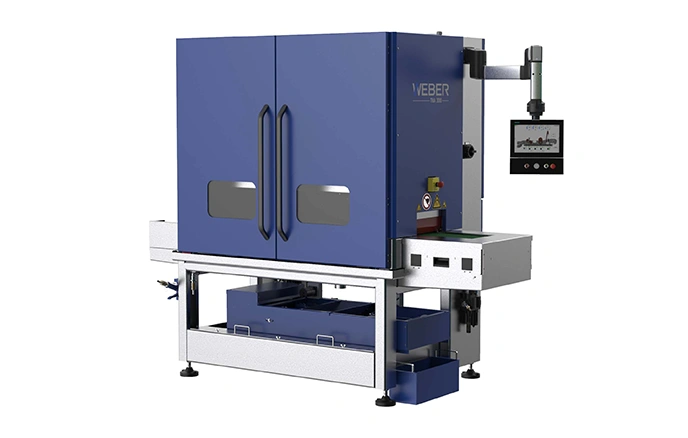
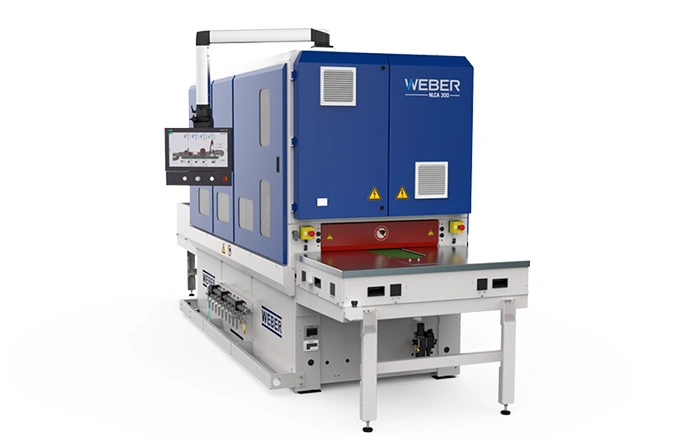
The right solution for any requirement
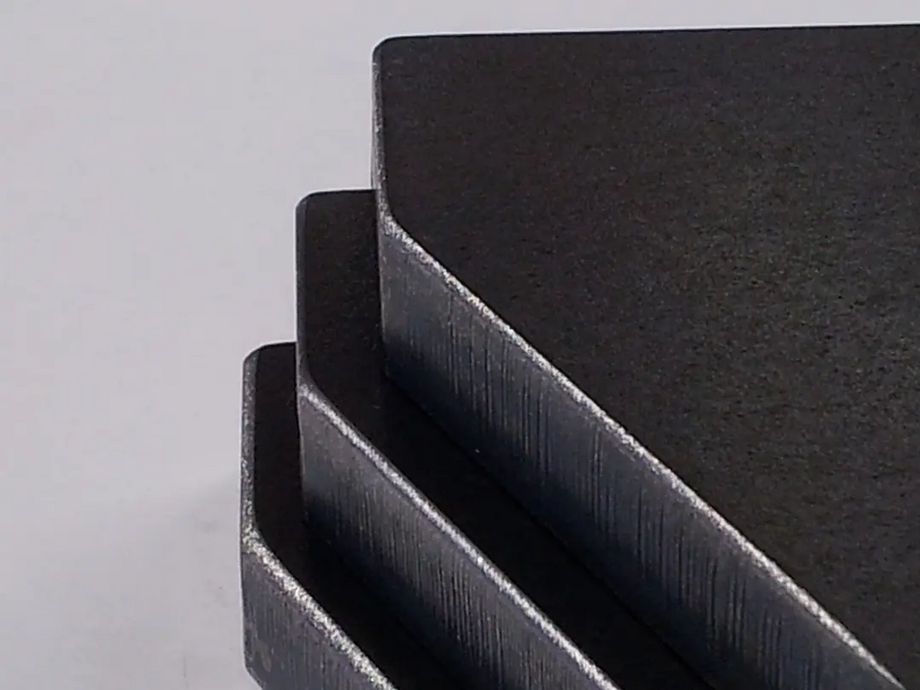
For edge radii of up to 2 mm, combining multiple brushing systems provides an effective solution. Large, consistent edge radii help reduce the risk of injury and can improve corrosion protection, making them particularly valuable for demanding industrial applications.
WEBER offers flexible combinations of brushing units to meet different material and surface requirements. From damage-free edge processing to large edge radii, the right configuration can be tailored to the specific application.
Our quick-change system allows tools to be replaced within minutes, minimizing downtime and preventing unwanted material carry-over between applications.
FAQ
Questions About Edge Rounding
Edge rounding is the process of smoothing and rounding sharp edges on a workpiece to create a defined radius. It improves the appearance and safety of the part while helping to reduce wear and extend its service life.
- Safety: Rounded edges reduce the risk of cuts and injuries caused by sharp edges.
- Aesthetics: Smooth, consistent radii give workpieces a clean, high-quality finish.
- Durability: Rounded edges can reduce the risk of damage and help extend the service life of components.
Yes. The right technique depends on the machine, material, workpiece geometry, and desired edge radius. Parameters such as tool configuration, processing angle, and sanding pressure can be adjusted to achieve consistent and precise results.
WEBER sanding and brushing systems are designed to adapt to different workpieces and processing requirements, ensuring uniform edge rounding and high-quality results.
Proper edge rounding is essential for effective coating and corrosion protection. In many applications, an edge radius of at least 0.3 mm is recommended to ensure sufficient coating coverage and adhesion.
Depending on the application and applicable standards, larger radii of up to 2.0 mm may be required. WEBER edge rounding solutions provide the precision and consistency needed to meet these demanding requirements.
Rounding sharp sheet metal edges significantly reduces the risk of cuts and injuries during handling and assembly. This is particularly important in working environments where employees regularly come into contact with metal components.
Even a small edge radius of around 0.1 mm can make a significant difference, depending on the application. Edge rounding helps prevent cuts and reduces the risk of sharp edges damaging components such as pneumatic hoses, cables, or other sensitive parts during assembly and operation.
Contact, Opening Hours, Locations
Solutions for the future - Contact us
Kontakt