Laquer sanding
Perfect lacquered surfaces:
Precision and innovation in wood finishing
Das Wichtigste
Intermediate lacquer sanding and high-gloss sanding
Lacquered surfaces require the highest level of precision to achieve a flawless finish. Even minor imperfections, such as uneven areas or paint nibs, can affect the final appearance.
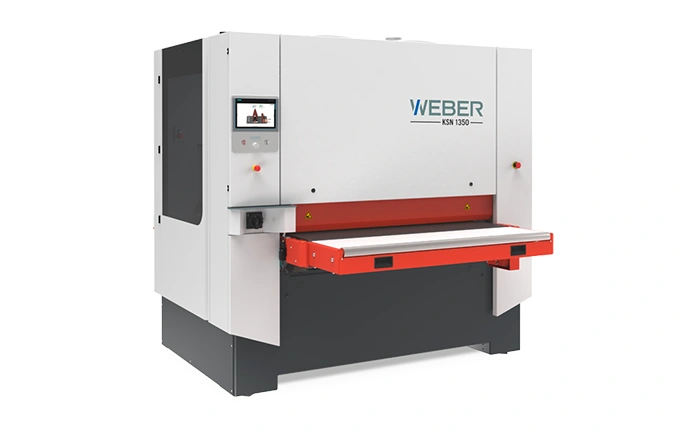
WEBER sanding machines provide precise and controlled processing for demanding lacquer sanding applications. Technologies such as CBF (Cross Belt Finishing) help minimize visible sanding marks, while the ISD pressure beam enables precise control of sanding pressure.
These technologies ensure consistent surface quality and provide an ideal foundation for high-gloss finishes and subsequent coating processes.
WEBER technology for laquer sanding
WEBER sanding technology is designed to meet the demanding requirements of lacquer and high-gloss surface finishing. Advanced solutions help remove imperfections such as paint drips, dust particles, surface irregularities, and visible sanding marks.
The modular design of WEBER sanding machines allows different technologies and sanding units to be combined according to the specific application. This provides precise control of the sanding process and consistently smooth, high-quality surfaces.
With flexible machine configurations, WEBER provides the right technology for demanding lacquer sanding applications and changing production requirements.
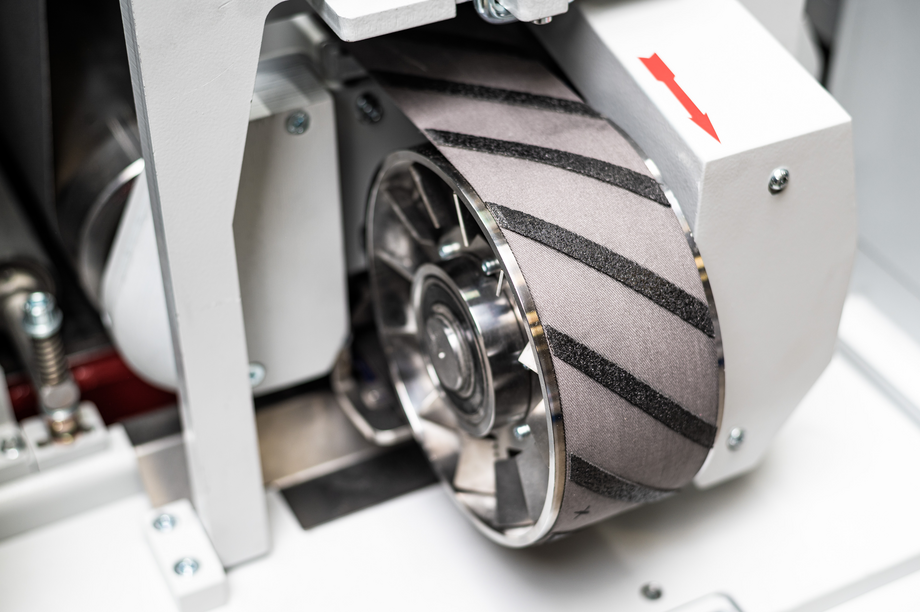
The patented WEBER CBF (Cross Belt Finishing) technology is designed for high-quality lacquer sanding, particularly in final sanding applications. Its cross-running sanding belt continuously changes the contact between the abrasive and the workpiece, producing an exceptionally smooth surface without visible oscillation marks.
The changing contact also helps prevent excessive heat buildup, reducing the risk of the sanding belt sticking during lacquer sanding. The sanding belt automatically compensates for tolerances and wears evenly across its entire width, while also being quick and economical to replace.
CBF technology can achieve fine sanding results without compromising surface quality and can reduce the need for additional sanding steps. Unlike conventional oscillating sanding units, CBF provides consistent, mark-free results across different materials and surfaces.
The result: flawless surfaces, efficient processing, and an ideal foundation for high-quality lacquer finishes.
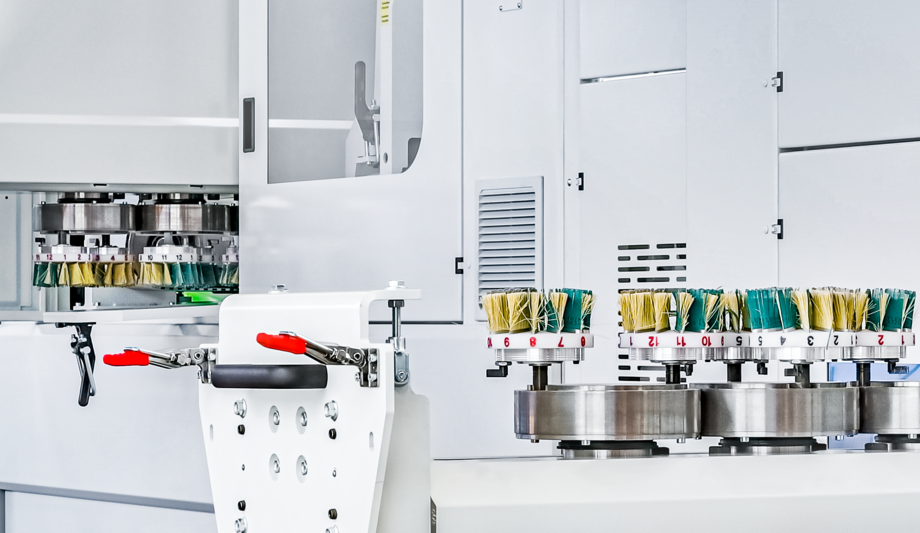
For demanding lacquered and high-gloss surfaces, WEBER combines planetary head technology with proven round and cross-brush systems.
Round brushes process the front and rear edges, while cross brushes provide gentle treatment of the longitudinal edges. This combination enables consistent processing while protecting sensitive lacquered surfaces.
The patented WEBER R2 and R6 planetary head systems use rotating brush heads with fine abrasive tools to achieve a uniform sanding pattern across the entire working width. The overlapping tool paths ensure consistent processing in all directions.
The planetary head is particularly effective for profiled parts, curves, and folds, as the adjustable heads can follow different surface geometries. Multi-directional sanding shortens wood fibers evenly, improving surface quality, coating results, and paint adhesion while potentially reducing lacquer consumption.

Lacquer sanding generates fine, sticky dust that can accumulate on both the workpiece and inside the machine. WEBER offers dedicated dedusting technologies to keep surfaces clean and prepare them for subsequent coating processes.
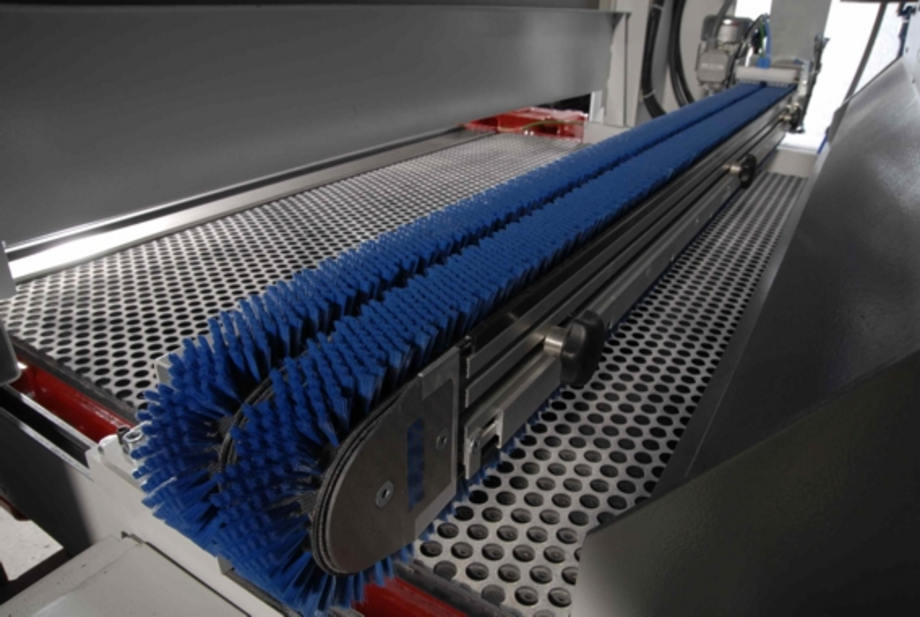
Conveyor Belt Cleaning Brushes: Remove dust and residues from the conveyor belt and help prevent workpieces from sticking.
WEBER ES Workpiece Blow-Off System: Self-propelled compressed-air rotors efficiently remove dust from the workpiece. The system activates only where parts are present, reducing compressed-air consumption.
Wall Brushes: Remove fine dust from the workpiece surface. Moistening the brushes enables particularly thorough cleaning before painting.
Cross Cleaning Brushes: A cost-effective solution for cleaning the underside of workpieces at the machine outlet. Adjustable height ensures reliable cleaning and clean transfer to the painting line.
These technologies can be integrated individually or combined to provide reliable, continuous dedusting for demanding lacquer and high-gloss sanding applications.
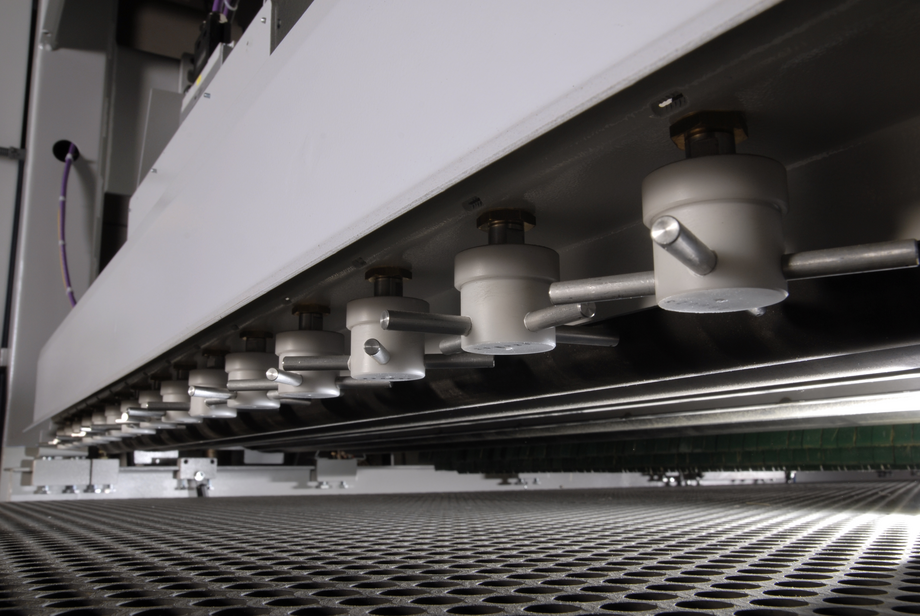
Consistent sanding pressure across both the surface and edges is essential for high-quality sanding results. The WEBER ISD Link Pressure Beam uses freely movable pressure elements connected to the sanding lamella to automatically distribute pressure evenly across the sanding belt.
The flexible spacing between the individual pressure elements allows the system to be precisely adapted to different workpieces and edge geometries, enabling particularly fine pressure patterns for demanding veneer and lacquer applications.
Lacquer and high-gloss sanding often require increased sanding pressure at the edges, where excess lacquer can accumulate after multiple coating processes. The WEBER ISD system allows the sanding pressure to be individually adjusted in different areas, ensuring controlled removal of excess lacquer without unnecessarily sanding away the workpiece edge.
The result: precise edge processing, consistent surface quality, and reliable results even for demanding lacquer and high-gloss applications.
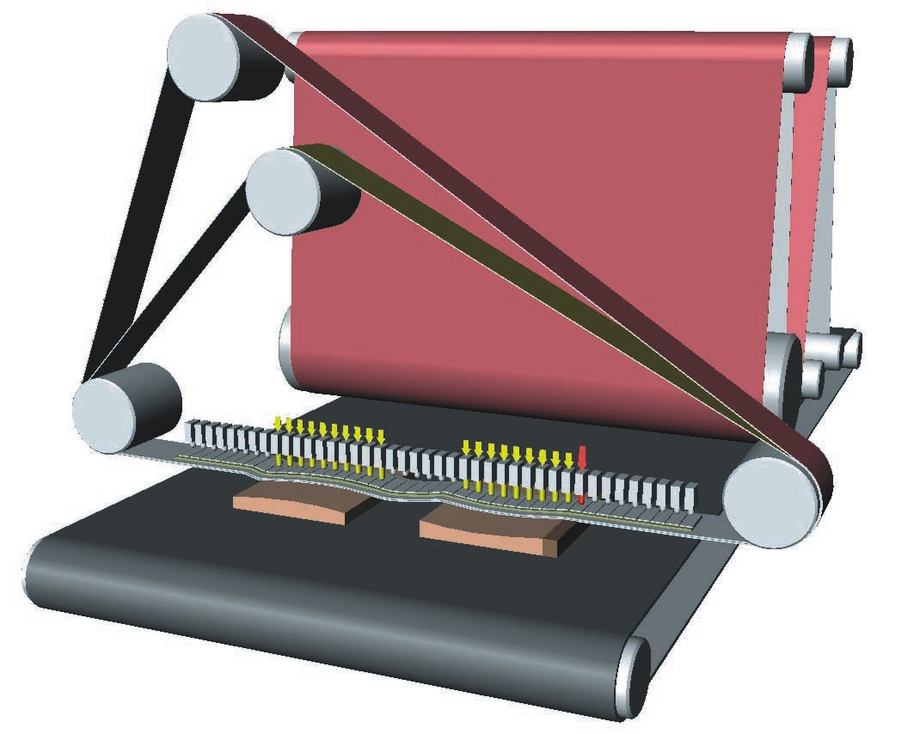
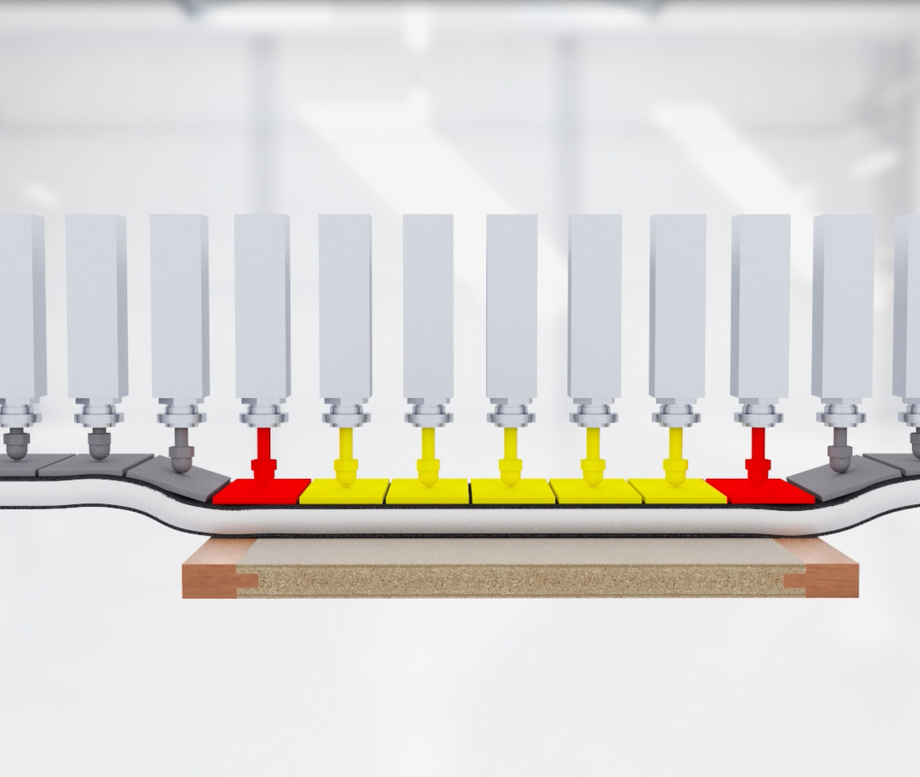
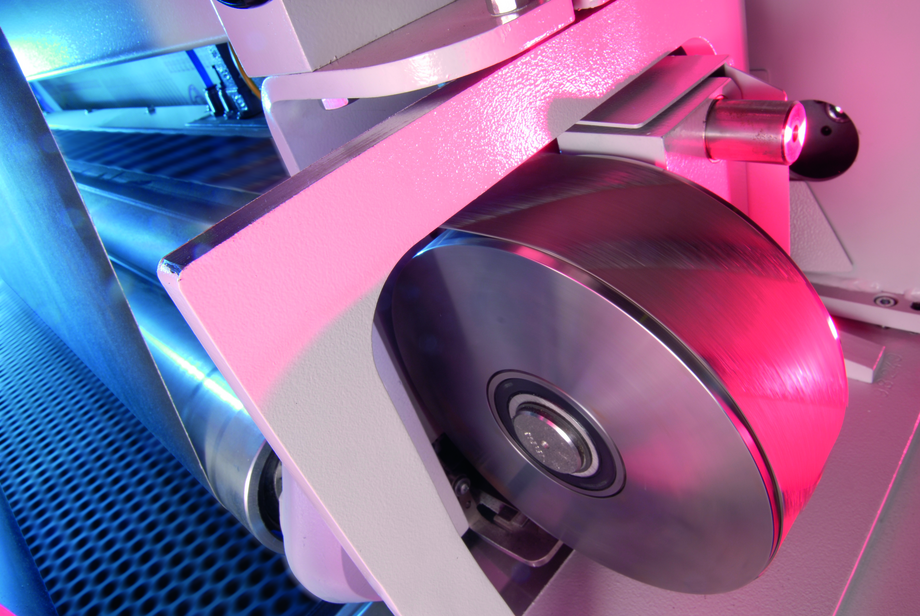
Precise workpiece detection is essential for the reliable operation of sanding systems with link pressure beams. The contactless WEBER SCAN laser system detects the entire working width without mechanical scanning or complex indexing systems.
The laser reliably detects height differences within a tolerance range of up to 2 mm and can also identify color-coded areas on the workpiece. This enables precise control of the sanding process and allows different surface areas to be processed according to their specific requirements.
WEBER SCAN can also detect quality variations during ongoing production, helping to identify deviations at an early stage and maintain consistent processing quality.
Series for lacquer sanding
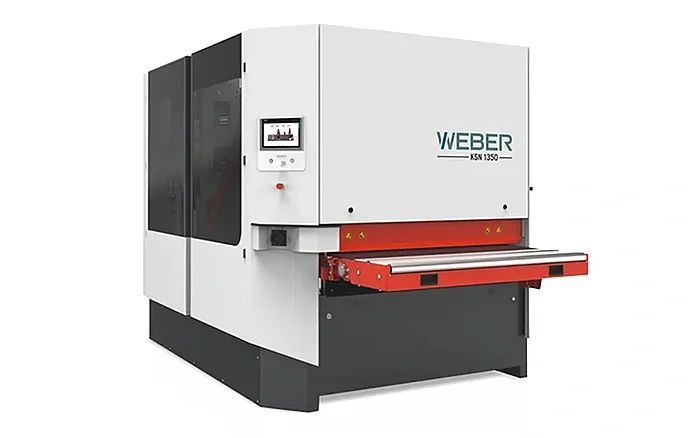


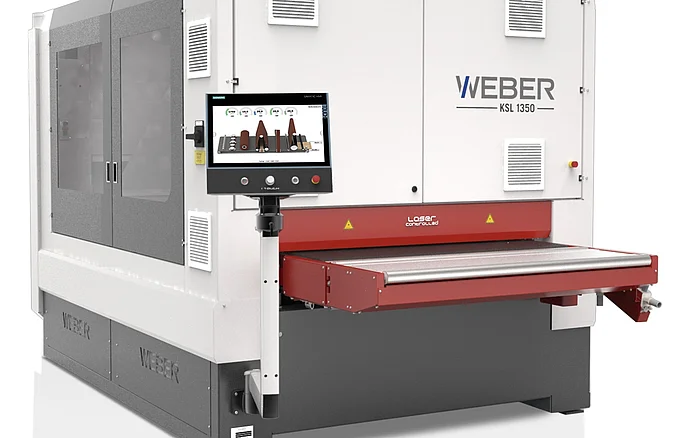
Mastering the high-gloss finish effortlessly
High-gloss sanding presents a particular challenge: thick lacquer layers tend to accumulate along the edges due to surface tension. Conventional pressure beam systems may not apply sufficient pressure in these areas, leaving uneven surfaces or excess lacquer.
The WEBER ISD Link Pressure Beam adapts precisely to the workpiece and allows the sanding pressure at the edges to be increased continuously. This enables effective removal of excess lacquer and paint nibs while maintaining controlled processing across the surface.
For an optimal high-gloss finish, multiple sanding belts with different grit sizes are used to progressively refine the surface. A final cross-belt sanding step provides a smooth, uniform finish with minimal visible sanding marks.
Precision in intermediate lacquer sanding
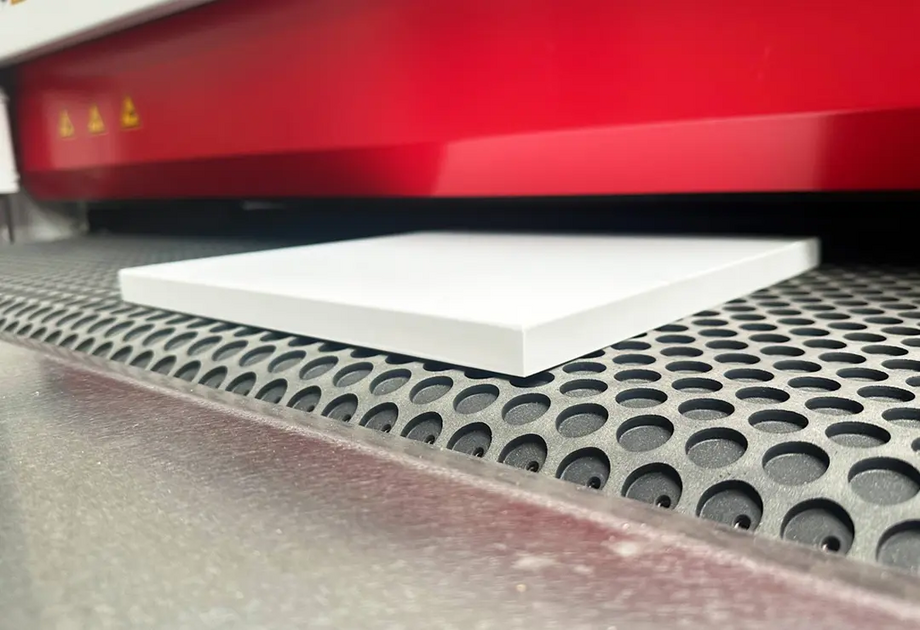
Intermediate lacquer sanding requires precise control to create a smooth surface without removing excessive material. After the first lacquer coat is applied, the wood fibers can rise and must be carefully sanded down before the next coating.
The WEBER ISD Link Pressure Beam allows the sanding pressure to be individually adjusted across different areas of the workpiece. Pressure can be reduced in sensitive edge areas to prevent sanding through thin lacquer layers while maintaining effective surface processing.
Some lacquer systems can also become soft or smear when exposed to excessive frictional heat. WEBER sanding machines use precise speed control with PM motors, allowing very low sanding speeds to minimize heat generation and prevent lacquer from smearing.
The result: controlled sanding, protected edges, and a consistent surface ready for the next coating.
FAQ
Questions about lacquer sanding
Lacquer sanding is the process of smoothing and refining a lacquered surface to remove imperfections, uneven areas, and other surface defects. It creates a uniform, smooth surface that is optimally prepared for subsequent coating or finishing steps.
In professional applications, precise lacquer sanding is essential for achieving a high-quality, flawless finish.
Precision and a clean working environment are essential for successful lacquer sanding. Controlled material removal is necessary to achieve a uniform surface without sanding through the lacquer layer.
Effective dust removal is equally important to prevent particles and contaminants from settling on the workpiece and affecting the final surface quality.
Two key factors are the feed speed and the grit size of the abrasive.
A low, controlled feed speed enables precise material removal and helps prevent excessive sanding. The right grit size is equally important: fine abrasives create a smooth, uniform surface with minimal visible scratches or imperfections.
Together, these factors are essential for achieving a high-quality surface suitable for a flawless high-gloss finish.
A typical lacquer sanding process often follows the sequence cross belt – wide belt – cross belt – cross belt. The surface is first processed with a cross belt, followed by wide-belt sanding and additional cross-belt sanding steps.
This combination creates a uniform sanding pattern, removes surface imperfections, and prepares the workpiece for a smooth, high-quality lacquer finish.
Several techniques can help achieve a high-quality finish when sanding lacquered wood surfaces. Sanding in the direction of the wood grain helps create a uniform surface, while progressively finer grits refine the finish and remove visible sanding marks.
Each sanding step should gradually improve the surface without removing excessive material. Precise sanding pressure and appropriate abrasive selection are also essential for achieving a smooth, consistent surface ready for the final finish.
Contact, Opening Hours, Locations
Solutions for the future - Contact us
Kontakt