Oxide layer removal with deburring machines
Deburring machines from WEBER
for flawless workpieces
Das Wichtigste
Remove oxide layer with intelligent grinding technology
Oxide layers form when metal reacts with oxygen during processes such as laser cutting. These layers can negatively affect the appearance, surface quality, and further processing of sheet metal.
Removing the oxide layer is particularly important before processes such as powder coating, painting, or welding. Remaining oxides can reduce coating adhesion and contribute to uneven or inconsistent welding results.
WEBER grinding technology reliably removes oxide layers and prepares the surface for subsequent processing, ensuring clean, consistent, and high-quality results.
WEBER technology
Thorough oxide layer removal is essential for preparing metal surfaces for subsequent processes such as powder coating and painting. A clean surface ensures reliable coating adhesion and helps prevent premature flaking or corrosion.
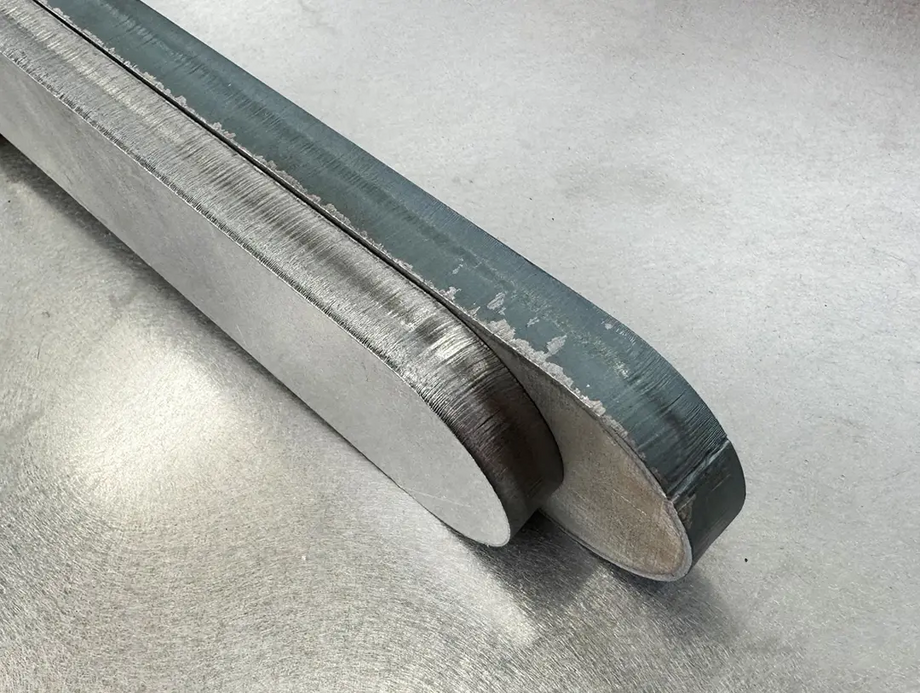
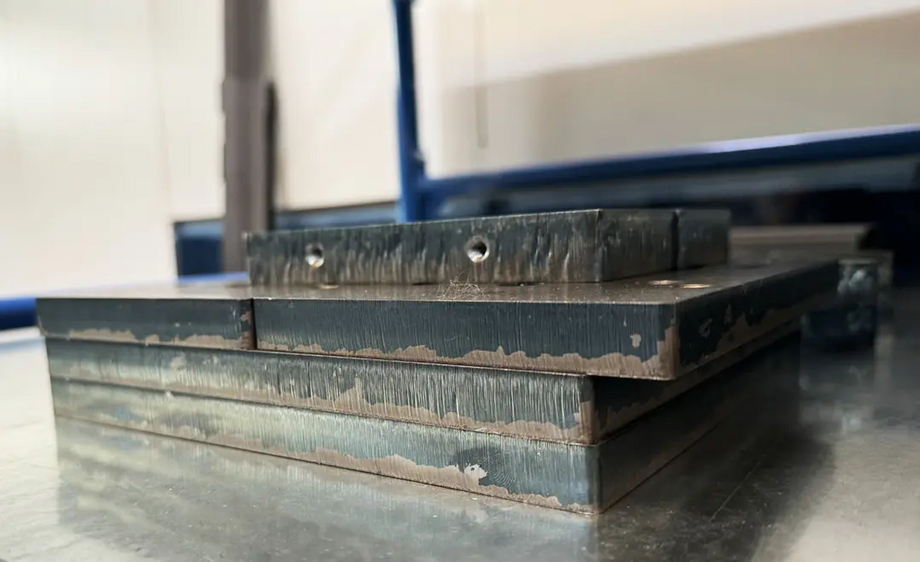
CO₂ laser cutting of steel can create a hard oxide layer on the cut edge that may not adhere firmly to the material. If it remains on the surface, mechanical stress can cause the layer and coating to flake, leaving the steel exposed to corrosion.
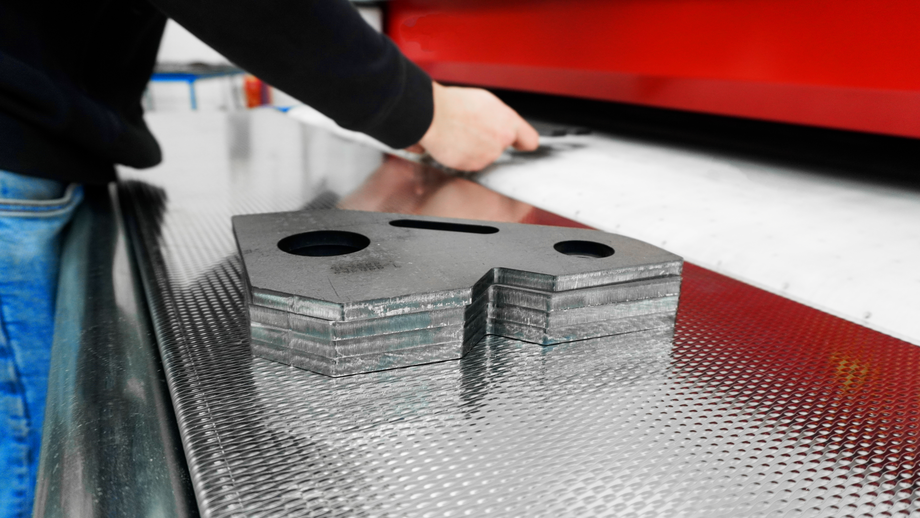
WEBER deburring and grinding technology effectively removes oxide layers from cut edges, creating a clean and consistent surface that is optimally prepared for further processing and long-term coating performance.
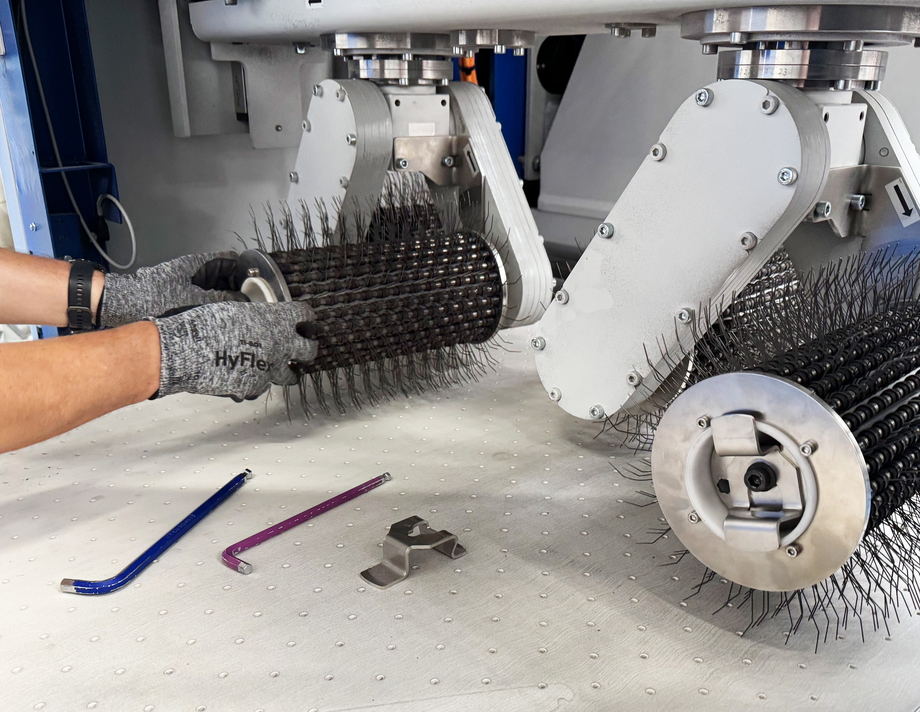
The WEBER P6 and patented P2 planetary head systems provide an efficient solution for removing stubborn oxide layers from laser-cut edges. High-quality wire hook brushes made from durable spring steel effectively remove even firmly adhering oxides.
The planetary heads use a dual rotary movement to keep the brush tips at an optimal angle to the cutting edge. This ensures thorough and consistent oxide removal across the entire workpiece.
Different brush types, densities, and lengths, combined with adjustable speeds and precise tool positioning, allow the process to be adapted to different materials, sheet thicknesses, and application requirements.
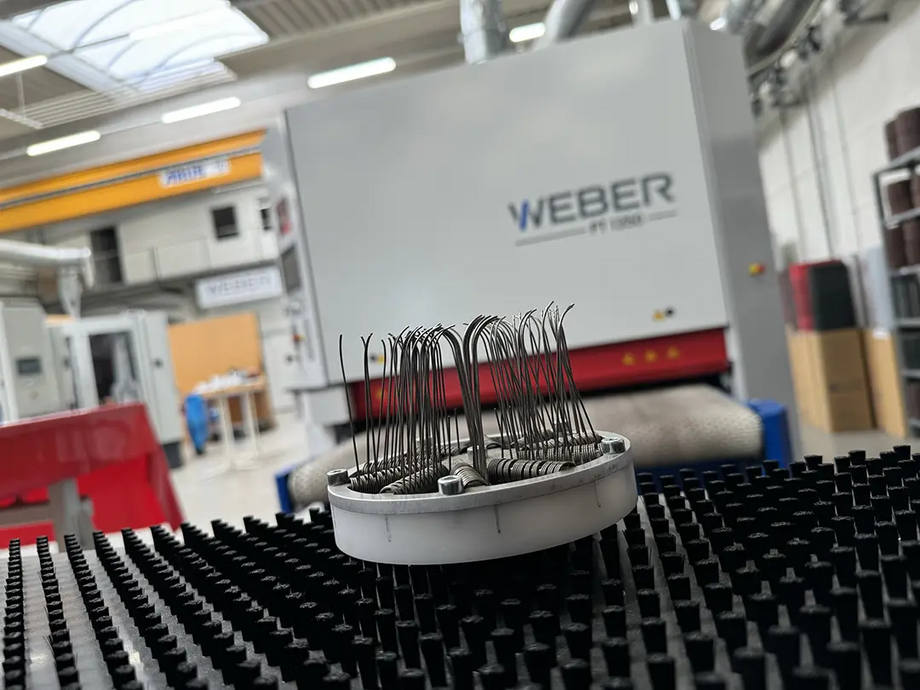
The WEBER R2 Multi-Rotation System provides effective oxide layer removal and prepares laser-cut edges for reliable subsequent coating processes.
Several rotating brush units are arranged in an overlapping configuration to ensure consistent processing along the entire cutting edge. Specially shaped, spring-loaded wire hook brushes reach deep into the cut edge – up to 25 mm from one side – and effectively loosen and remove loose oxide layers.
In addition to oxide removal, the brushing process lightly roughens the surface, improving the adhesion of subsequent coatings such as paint or powder coating.
The result is a clean, consistently prepared surface for reliable downstream processing.
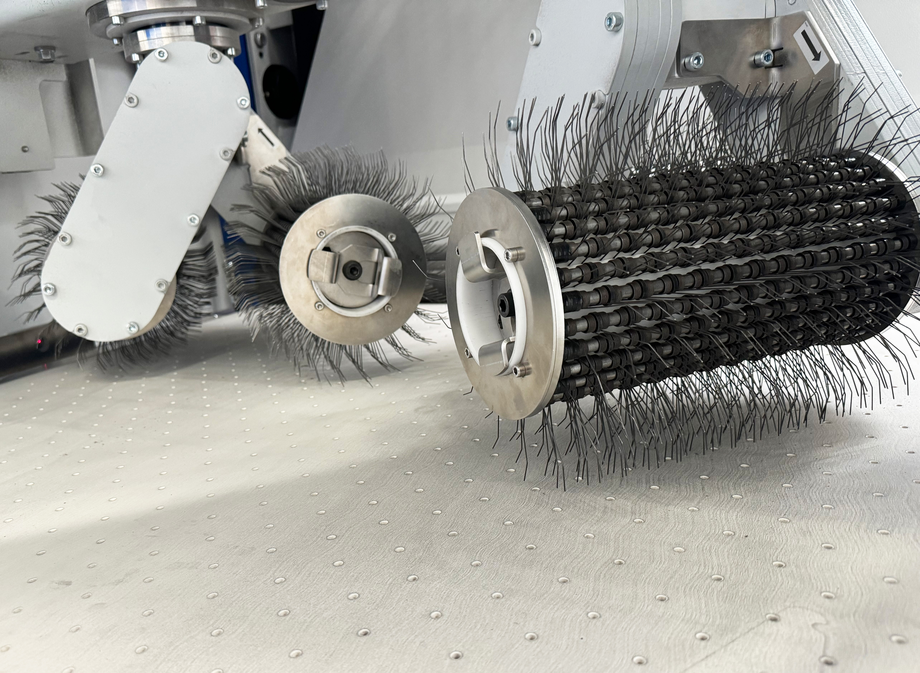
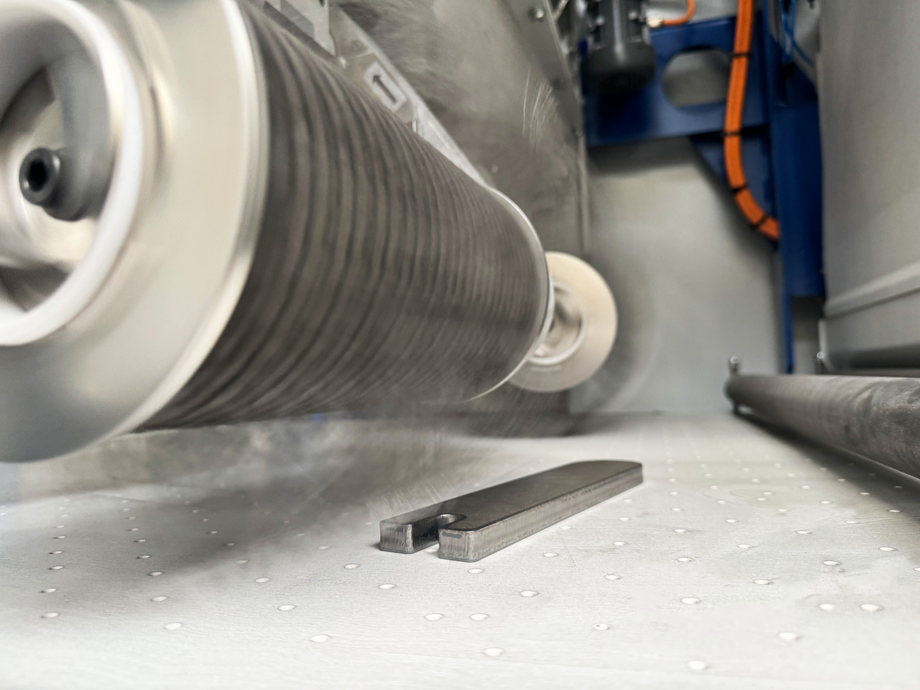
Grinding machines for oxid removal
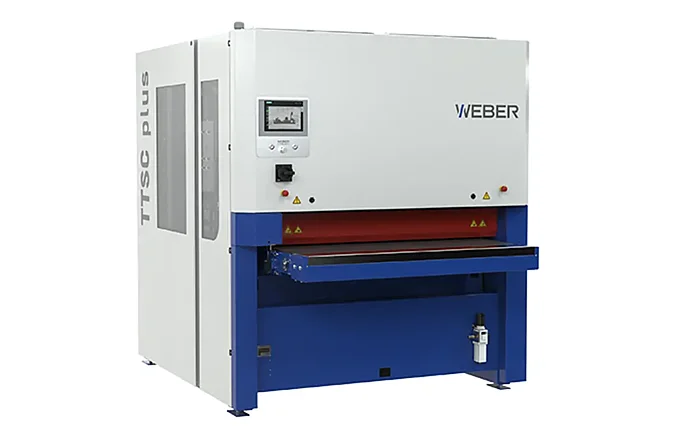
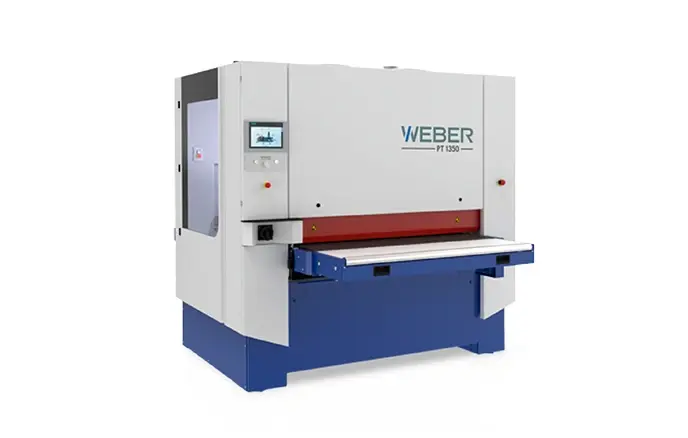

Effective oxide layer removal in metal processing
WEBER deburring machines provide reliable and consistent oxide layer removal across a wide range of metalworking applications. Different tool configurations can be quickly changed to match the specific requirements of the workpiece.
The flexible machine design allows the processing of different material types, thicknesses, sizes, and geometries. This makes WEBER deburring technology a versatile solution for preparing metal surfaces for subsequent processes such as coating, painting, and welding.
WEBER advantages - Maximum flexibility
WEBER sanding machines are designed for maximum flexibility and easy adaptation to different processing requirements. Proven machine design enables fast and straightforward tool changes, minimizing setup times.
The intuitive WEBER i-Touch control allows operators to enter, save, and recall key processing and tool parameters. With more than 300 programmable settings, different applications can be configured and selected quickly.
Integrated diagnostics and remote maintenance simplify troubleshooting and service. Frequency-controlled drives automatically adapt the machine to different tool and processing speeds, ensuring efficient and consistent performance across a wide range of applications.
Frequently asked questions about removing oxide layers with grinders:
An oxide layer is a layer that forms on a metal surface when the metal reacts with oxygen. In metalworking, oxide layers can occur during processes such as laser cutting and may affect the surface quality, appearance, and adhesion of subsequent coatings.
Removing the oxide layer is important to ensure good adhesion of paints, coatings, adhesives, or other materials to the metal surface. A clean metal surface allows for a better bond and improves the durability of the coating.
Yes, it is possible for a new layer to form after the oxide layer has been removed, especially if the metal is exposed to air or moisture again. To prevent this, coatings or anti-corrosion agents can be applied to protect the metal surface.
The oxide layer should be removed before a coating or other material is applied to the metal surface. This ensures optimum adhesion and durability of the material applied.
Contact, Opening Hours, Locations
Solutions for the future - Contact us
Kontakt