Heavy plate processing: Beating the giants
Beating the giants: tough metal, smooth result
Das Wichtigste
From thermal cutting to the perfect component: deburring and rounding of warped heavy plates
Whether you need to deburr distorted flame- or plasma-cut parts, remove stubborn laser burrs, or achieve precise edge rounding, WEBER offers the right solution for your application – from standardized entry-level machines to fully customized systems.
Our advanced grinding and deburring technologies optimize your production process, delivering consistent results with minimal effort. Depending on the application, parts can often be processed in a single pass without prior turning.
WEBER technology makes even demanding deburring processes reliable and predictable, helping you reduce downtime, improve productivity, and achieve consistent quality – regardless of material thickness or workpiece distortion.
Warped sheets: Height levelling up to 10 mm
WEBER Float Technology automatically compensates for workpiece distortions of up to 10 mm, ensuring consistent processing even on heavily distorted sheets.
This is particularly beneficial for flame- and plasma-cut parts, where significant distortion can occur. The flexible units adapt automatically to the workpiece, eliminating the need for time-consuming straightening and allowing efficient processing to begin immediately.
The result: reliable machining, consistent quality, and reduced processing time and effort.
Sanding on both sides in one pass
WEBER's modular machine technology allows both the top and bottom surfaces of a workpiece to be processed in a single pass – eliminating the need to manually turn heavy parts that can weigh several tons. This saves valuable time while significantly improving workplace safety.
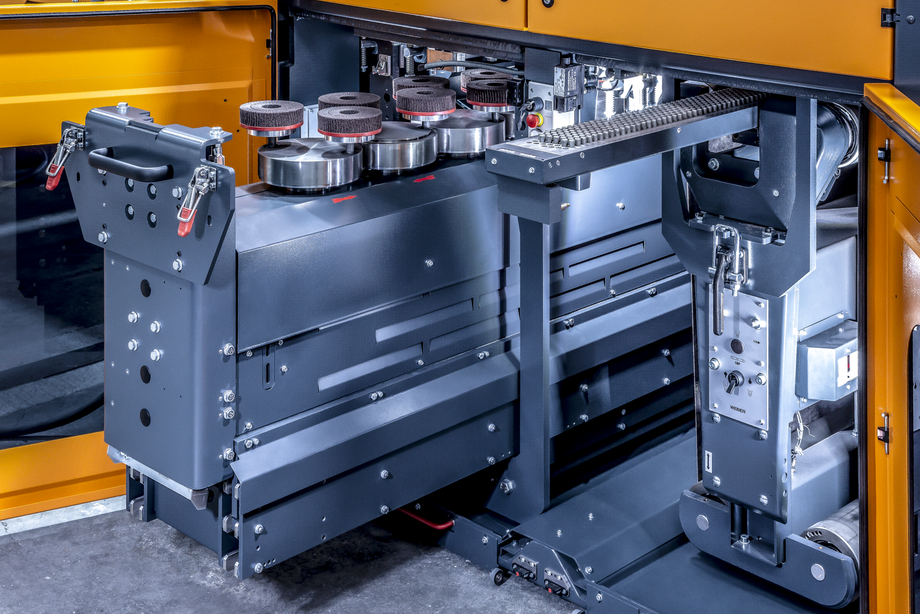
The combination of planetary heads, flexible grinding bars, and multi-rotation brushes enables efficient slag removal, consistent surface finishing, and precise edge rounding.
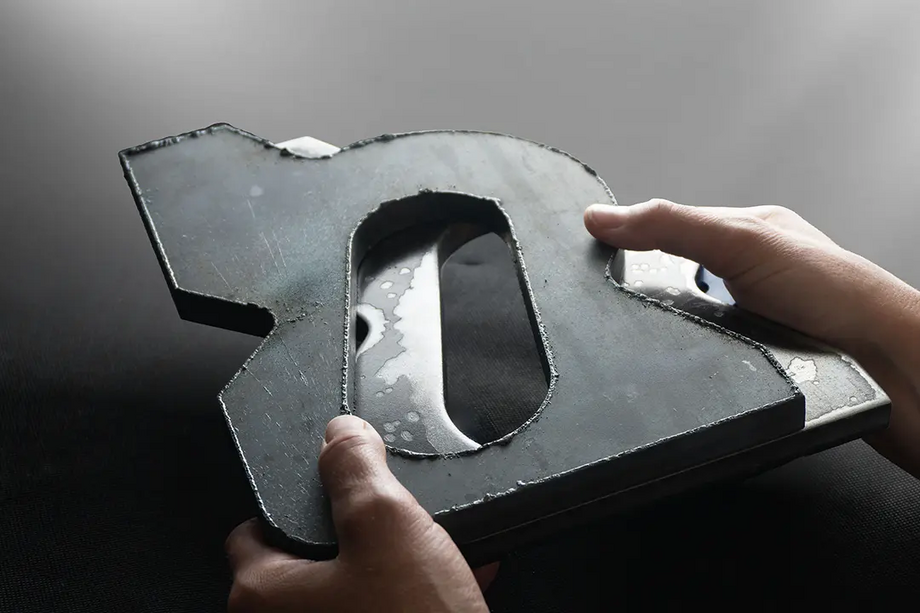
Selected planetary heads for flawless results
Perfect deburring of flame-cut blanks
Large flame-cut parts, heavy plate, and stubborn burrs present demanding challenges. Thermal cutting processes such as flame and plasma cutting can leave behind heavy slag, burrs, and workpiece distortions of up to 10 mm.
These challenges are particularly common in bridge, shipbuilding, steel construction, and offshore applications, where large workpiece dimensions, varying material thicknesses, and heavy manual handling can significantly affect productivity.
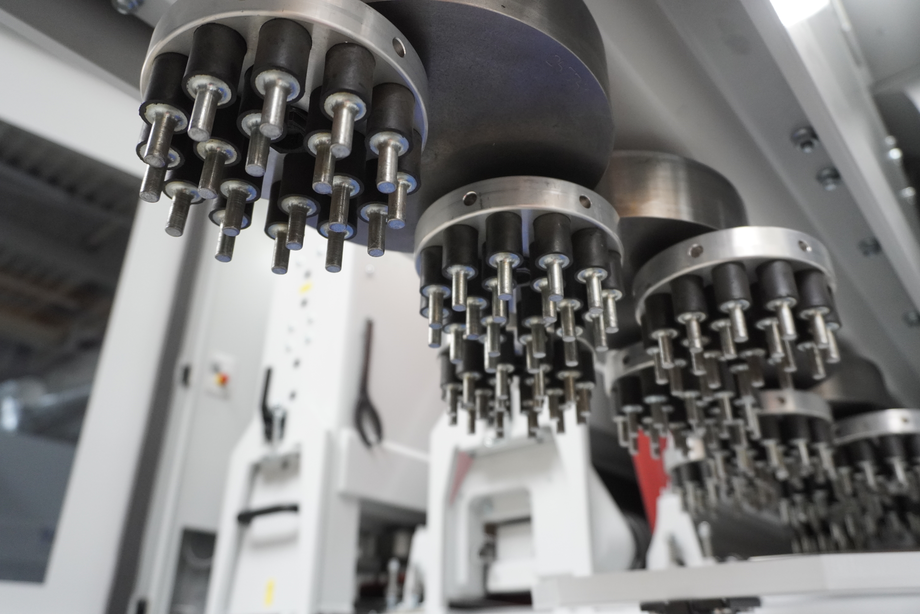
WEBER planetary head technology provides a reliable solution. Multi-directional processing efficiently removes burrs and slag while adapting to the workpiece geometry and minimizing tool wear.
The result is consistently deburred parts, ready for efficient downstream processing.
Beating the giants: Efficient slag removal
Heavy slag and distorted workpieces are no match for WEBER technology. Our WEBER Float Technology automatically adapts to height variations in the workpiece, eliminating the need for time-consuming leveling and allowing processing to begin immediately.
The unique planetary head reaches all areas of the workpiece and efficiently removes even heavy slag. The result is reliable, consistent processing and perfectly prepared parts – ready for the next production step.
Discover grinding machines for heavy plate processing:
FAQ on the topic of "heavy plate"

Heavy plate processing refers to the machining and finishing of thick metal sheets, typically over 3 mm in thickness. Heavy plates are commonly used in industries such as bridge and shipbuilding, construction equipment, steel construction, and offshore applications.
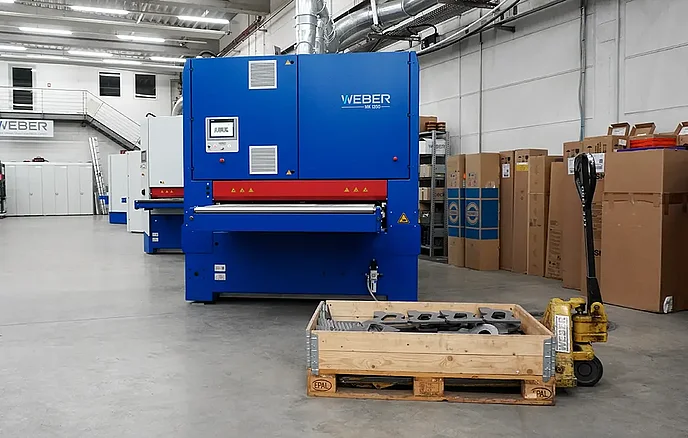
WEBER MK series
Designed for the heaviest, thickest, and most distorted sheet metal. Its robust design and up to five processing stations make it suitable for demanding heavy plate applications.
WEBER PT series
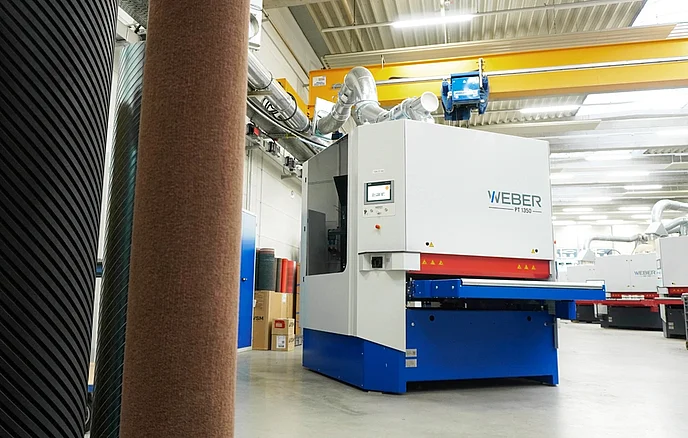
Versatile grinding machines for deburring, edge rounding, descaling, and surface grinding of both fine and heavy plate. Up to five grinding stations allow different processing configurations.
WEBER TTSC series
A compact entry-level solution for deburring plasma- and light flame-cut parts. Slag removal, edge rounding, and optional contact roller grinding can be combined in one machine.
Planetary head system
For flawless, even edge rounding on all sides of thick sheets, WEBER uses a compact planetary head unit that works either from above or below and thus delivers definable, reproducible results.
P2 Standard: Single-row system with seamlessly overlapping brush heads, sealed gears and 2 mm radius in one step - low-wear and easy to maintain.
- P2 slag hammer: Same design with integrated hammers at a 90° angle for efficient slag removal on oxy-fuel and plasma-cut edges.
- P6 Double row: Six brushes per carrier, electric height adjustment, programmable and adjustable for higher performance.
WEBER Float Technology
The floating units compensate for sheet metal distortions of up to 10 mm fully automatically. Even heavily distorted parts are deburred and rounded.
Contact roller unit "D"
Rubberised sanding rollers generate the pressure by lowering below the thickness of the workpiece. They remove burrs and thick laser splashes evenly for a smooth finish and can be precisely readjusted at any time thanks to electrical adjustment.
Combined unit for stud grinding beam "STC"
Hardened pins press down the sanding belt with millimetre precision and automatically compensate for thickness tolerances. Ideal for thick, uneven sheets, the system impresses with its consistent sanding quality, high throughput and long belt service life.
MRB unit "R2"
Two rotating heads, each with two interlocking brushes, ensure even rounding of all inside and outside edges. Compactly combinable, it works gently on coated or galvanised surfaces without damaging the coating.
Cross belt unit "C"
Cross-belt sanding with up to 10 mm warpage: By using only half the belt width, the front edge remains above the workpieces, threading is prevented and multi-track loading is possible. The control system reminds you to turn the belt at intervals.
Elliptical disc unit "Eu"
Bottom-grinding with elliptical disc brushes arranged in two rows, which produce counter-rotating processing despite co-rotation. Narrow pressure rollers enable the processing of parts from Ø 100 mm up to large sheets.
Sanding on both sides in one pass
Enables simultaneous processing of the top and bottom surfaces in a single machine pass, reducing setup times and increasing efficiency.
Contact, Opening Hours, Locations
Solutions for the future - Contact us
Kontakt