Veener processing
Solutions for every
veneer lumber project
Das Wichtigste
Processing veneer wood with WEBER sanding machines
Veneer requires particularly precise and gentle sanding to protect the thin wood layer and achieve a consistent surface finish. WEBER sanding machines combine specialized technologies to meet these requirements.
The WEBER Planetary Head System helps prevent wood fibers from lifting, while CBF Technology enables sanding without visible oscillation marks. The ISD Link Pressure Beam ensures controlled and uniform material removal, even on demanding workpieces.
Together, these technologies provide precise, gentle, and consistent veneer processing for high-quality surface finishes.
Innovative WEBER technology
Veneer processing requires precise and controlled sanding to protect the delicate material and achieve a consistent surface finish. WEBER has developed advanced sanding technologies specifically designed to meet these demanding requirements.
Our solutions ensure uniform sanding pressure, precise edge processing, and controlled material removal to prevent sanding through delicate veneer edges.
Discover our solutions for precise and reliable veneer sanding:
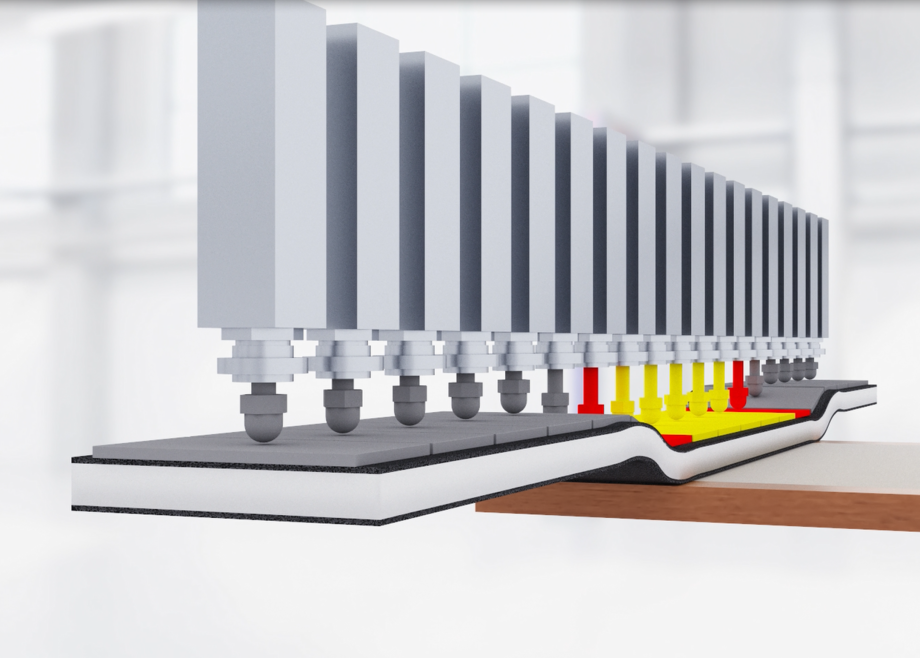
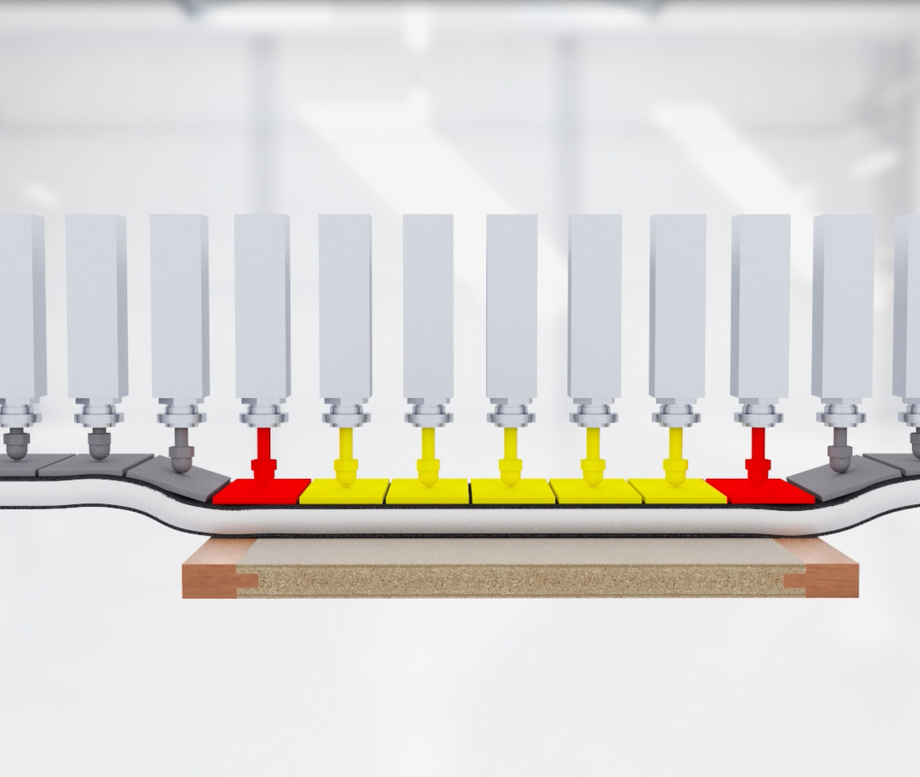
Precise and uniform sanding pressure is essential when processing veneer. The WEBER ISD Link Pressure Beam is designed to protect delicate veneer edges while ensuring consistent material removal across the workpiece.
Freely movable pressure elements connected to the sanding lamella automatically distribute the pressure evenly across the sanding belt. This ensures consistent processing along both longitudinal and transverse edges without unwanted lateral forces.
The flexible spacing of the pressure elements allows the system to be precisely adapted to different workpieces and edge geometries. Different areas can also be processed with individually adjusted sanding pressure for maximum control.
The robust design eliminates the need for additional guides, supporting reliable and low-maintenance operation while helping prevent unwanted edge damage during veneer sanding.
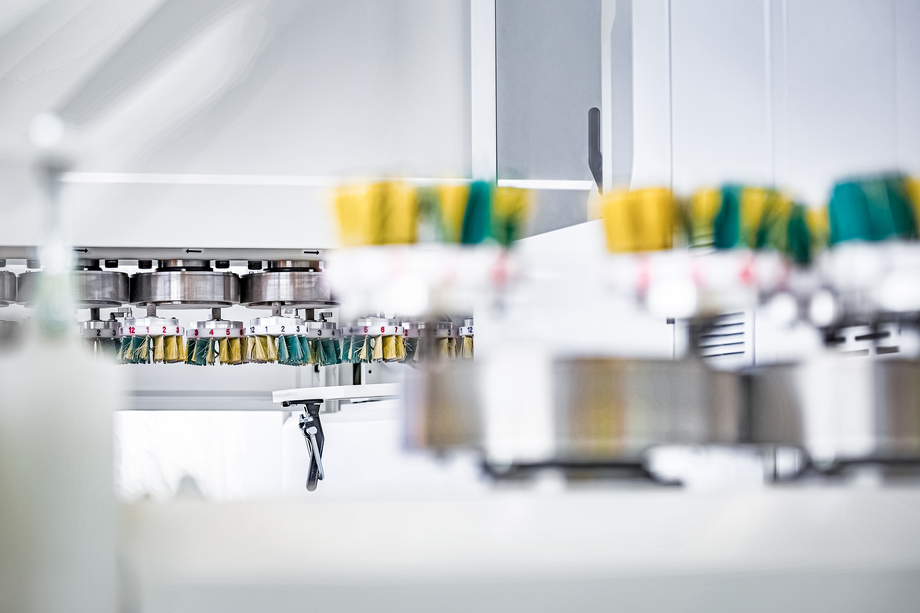
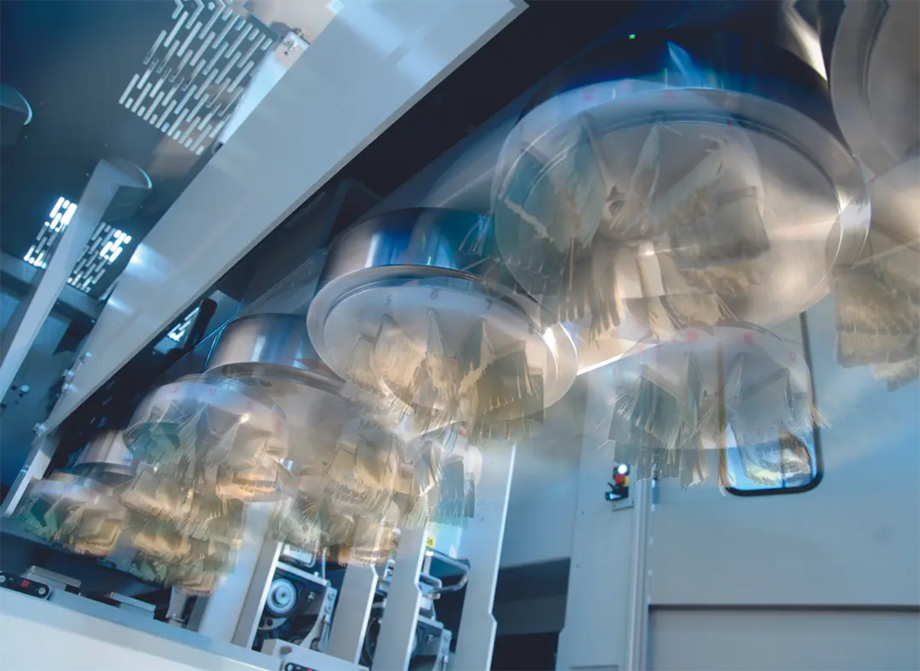
The WEBER R2 and R6 planetary head systems provide consistent surface finishing regardless of wood grain direction or workpiece geometry.
The planetary heads move in multiple directions, with overlapping tool paths ensuring uniform processing across the entire surface. The multi-directional sanding removes wood fibers evenly and also supports precise edge deburring.
The result is a smooth, uniform surface with an improved tactile quality. By processing the fibers in different directions, the planetary head system also helps prevent fibers from rising after sanding, reducing the need for subsequent rework.
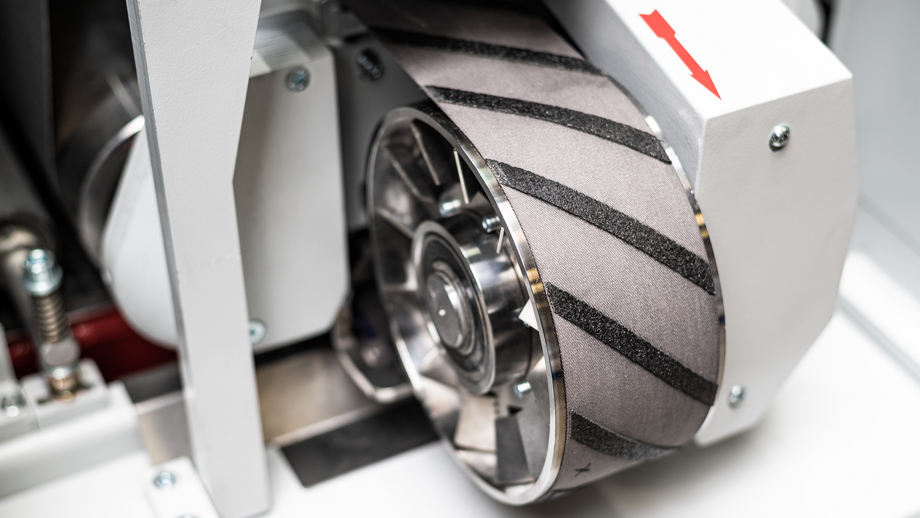
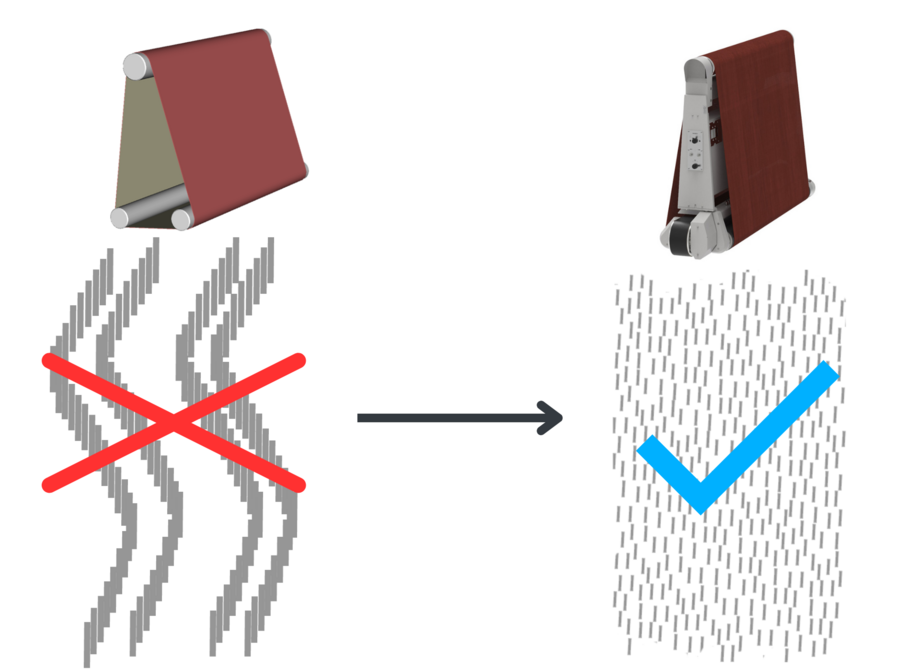
The patented WEBER CBF (Cross Belt Finishing) technology delivers smooth, uniform surfaces without visible oscillation marks. A transverse pressure lamella belt continuously changes the contact between the abrasive and the workpiece, creating a consistent sanding pattern across the entire surface.
The changing contact pressure also helps prevent excessive heat buildup, reducing the risk of the sanding belt sticking during processing. The lamella belt automatically compensates for surface tolerances, wears evenly across its width, and can be replaced quickly and economically.
CBF technology can also achieve particularly fine sanding results while allowing one grit level to be skipped compared with conventional cross sanding. This saves processing steps without compromising surface quality.
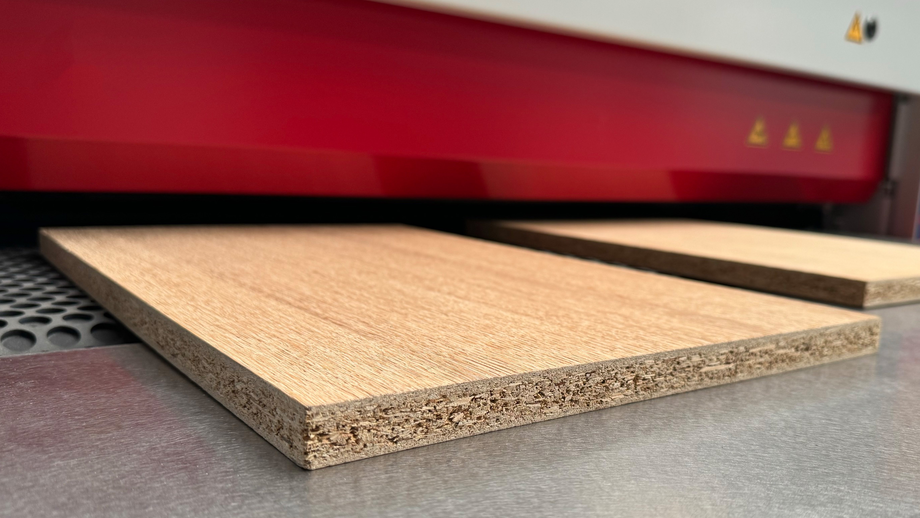
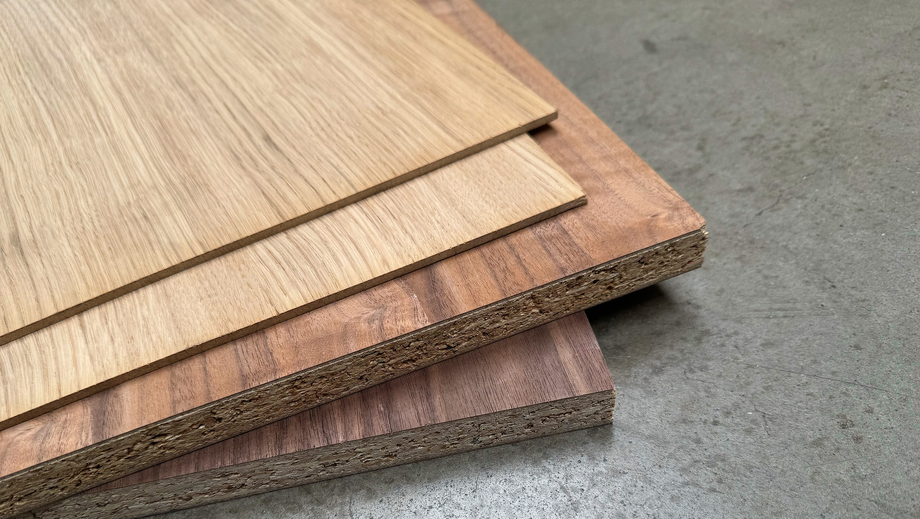
Funiere with a perfect surface
At WEBER, we understand that the diversity of veneers places different demands on processing. That is why we offer customized solutions for a wide range of veneer types.
- Veneer sheets from 0.25 mm
- Rotary cut veneer
- Laminated veneer
- Technical veneer
- Prepreg veneer
- Hybrid veneer
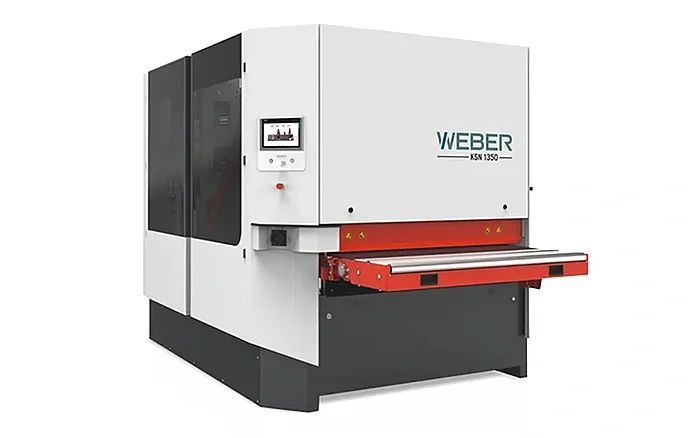
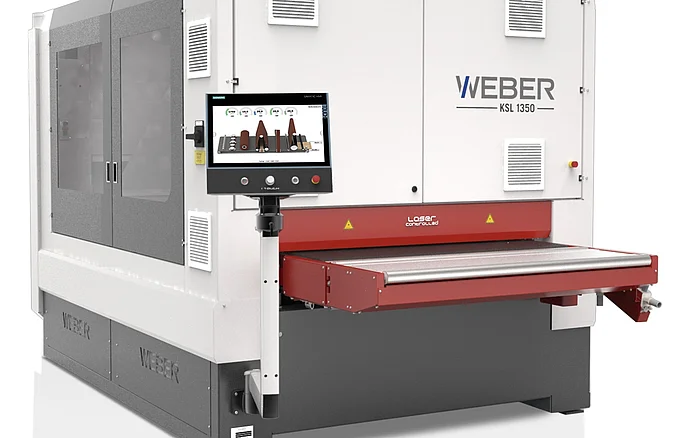
Discover our machines:

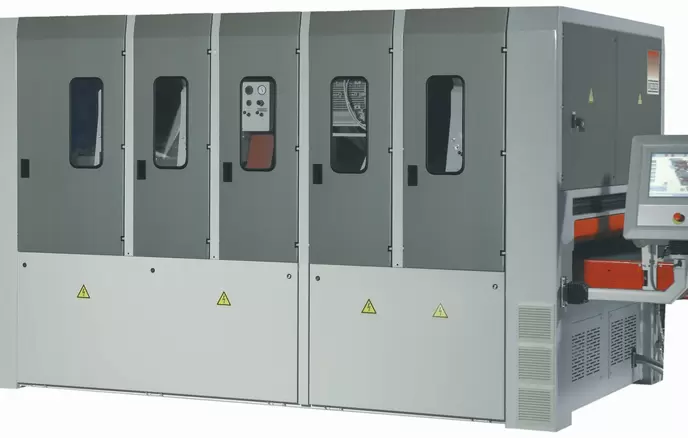
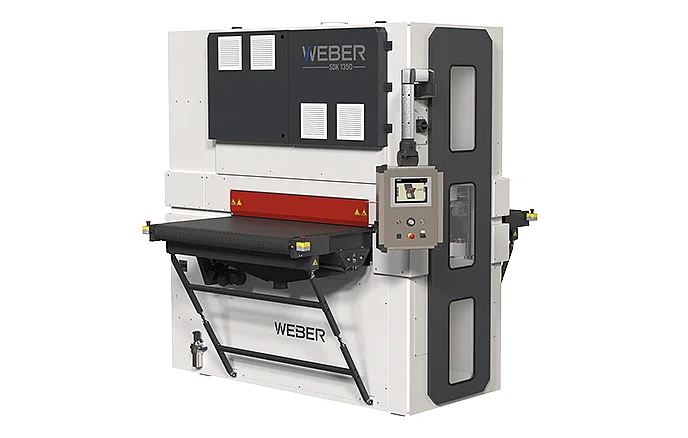


WEBER Specials – for even more efficient work and optimal grinding results
WEBER offers additional technologies designed to improve efficiency, process reliability, and surface quality in veneer sanding.
Automatic Workpiece Thickness Measurement
The system automatically detects the workpiece thickness and transfers the value to the machine's clearance height. This simplifies setup, saves time, and enables reliable sanding results from the start.
Vacuum Table – For Precise Workpiece Transport
A vacuum table securely holds veneer workpieces during processing. The perforated conveyor belt and table surface allow a blower to generate a vacuum, ensuring reliable adhesion and precise positioning throughout the machine.
Dust Solutions – For Clean Surfaces
The WEBER ES workpiece blow-off system uses self-propelled compressed-air rotors to remove sanding dust from the veneer surface. The rotors activate only where workpieces are present, helping reduce compressed-air consumption. Optional dust brushes at the machine outlet provide additional cleaning and remove remaining sanding dust before the next processing step.
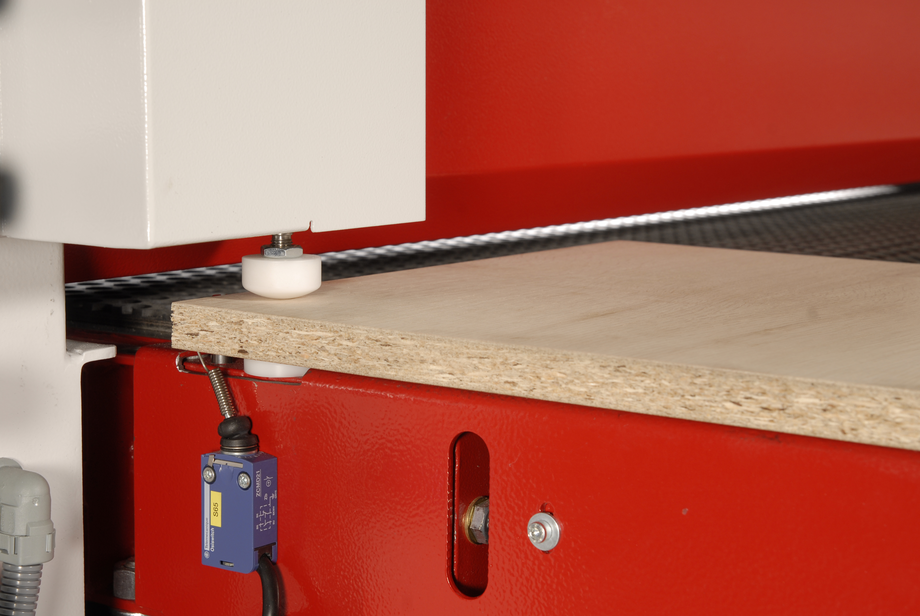
Automatische Werkstück-Dickenmessung
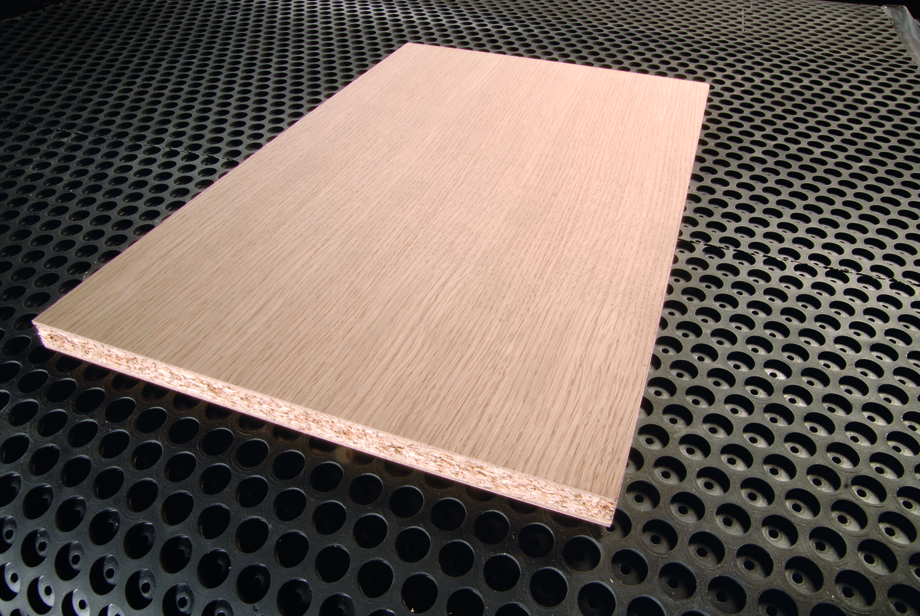
Vakuumtisch – für positionsgenauen Transport
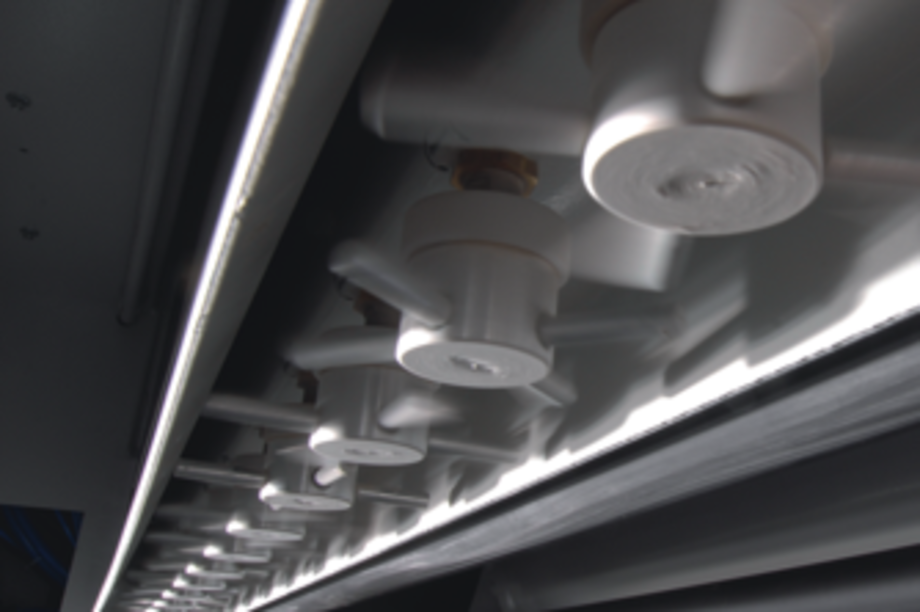
WEBER Absaugsystem
Wood Veneer Processing: A Fusion of Tradition and Technology
Veneer processing requires the perfect balance of precision and advanced sanding technology. WEBER sanding machines are engineered to produce smooth, consistent surfaces while preserving the natural appearance of the veneer. Selecting the appropriate abrasive and applying controlled sanding pressure are essential for achieving high-quality results. Because veneers are typically only 0.55–0.65 mm thick, their edges require particularly careful processing. WEBER machines ensure precise edge sanding, delivering a uniform finish while significantly reducing the risk of chipping.
FAQ
Questions about veneer processing
Yes. WEBER offers customized sanding solutions for processing thin veneer sheets with extremely high precision. The machines enable controlled material removal down to hundredths of a millimeter, making them particularly suitable for demanding applications in furniture manufacturing, interior design, and other veneer-processing industries.
Veneer processing involves sanding and finishing thin layers of natural wood to achieve a consistent thickness and high-quality surface. Because veneer is particularly thin and sensitive, the process requires precise and controlled material removal.
WEBER sanding machines use technologies such as CBF (Cross Belt Finishing) to achieve smooth, uniform surfaces while minimizing visible sanding marks. Precise processing is especially important for applications such as furniture manufacturing, interior design, and other high-quality veneer products.
Veneer is produced by cutting or peeling thin layers of wood from logs or timber blocks. In rotary peeling, the log is rotated against a knife to produce a continuous sheet of veneer. In slicing, individual thin sheets are cut from the wood.
The veneer sheets are then dried, sorted, and further processed as required. They can be used for furniture, interior design, flooring, and other applications where the natural appearance of wood is desired.
When sanding veneer, it is crucial to achieve a uniform surface without damaging the thin layers of the veneer. The sander should therefore be precisely adjusted to ensure uniform removal of the wood. Special attention must be paid to the edges to ensure that they are not rounded off or damaged. A fine sanding process using appropriate grit sizes and controlled pressure is necessary to achieve a smooth surface while preserving the integrity of the veneer.
Contact, Opening Hours, Locations
Solutions for the future - Contact us
Kontakt