WEBER sanding
WEBER LDK
1
sanding station
up to 3200 mm
working width
Processing in multi-shift operation
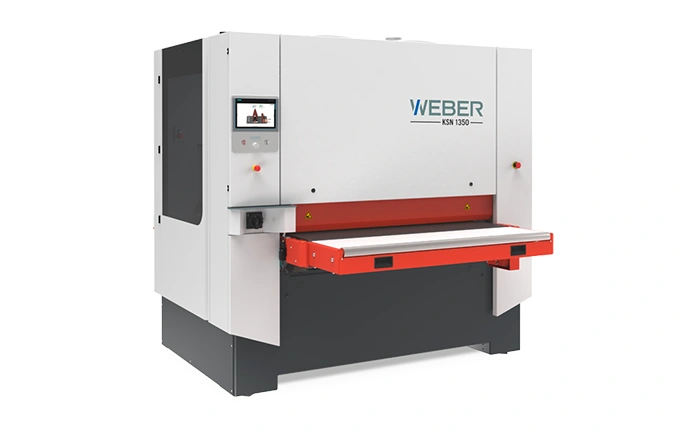
The WEBER LDK double-head sanding machine is specially designed for demanding applications in the panel industry. Its robust machine concept is engineered for continuous multi-shift operation and seamless integration into automated production lines.
With drive power of up to 160 kW per sanding belt, the LDK provides the power required for high material removal rates and demanding industrial applications. Optimized cutting and feed speeds ensure efficient and consistent processing even at high production volumes.

Technical specification
WEBER LDK
Special machine for the panel industry
- working widhts
- 2700, 3200 mm
- Calibration roller drive
- 160 kW
- Sanding belt length
- 3200 mm
- Operation
- "i-Touch" Controller, Multi Panel
- Sanding units
- contact roller unit (D)
- Werkstückdicke
- bis 500mm
- Vorschubgeschwindigkeit
- stufenlos
- Schleifaggregate
- Kontaktwalzenaggregat (D)

WEBER working stations
Available in steel or rubberized versions, WEBER contact rollers are designed for durable and reliable performance across a wide range of sanding applications. With adjustment accuracy down to 0.01 mm, they enable precise calibration for demanding sanding processes.
The rollers can also be used for various effect sanding applications, providing additional flexibility for creating distinctive and individual wood surfaces.
A smooth surface free from visible oscillation marks is a key indicator of high-quality sanding. WEBER CBF technology achieves this with a transverse pressure flap belt integrated into the wide-belt sanding station. The pressure flaps interrupt the contact between the abrasive grains and the workpiece, preventing the oscillation marks typically associated with conventional sanding belts.
The flap belt runs without a separate control system, maintains the full tolerance compensation of the link pressure beam, and wears evenly across its width. It is also quick and economical to replace.
Compared with conventional cross sanding, CBF technology can also skip one grit level, enabling particularly fine sanding results while maintaining consistently high surface quality.
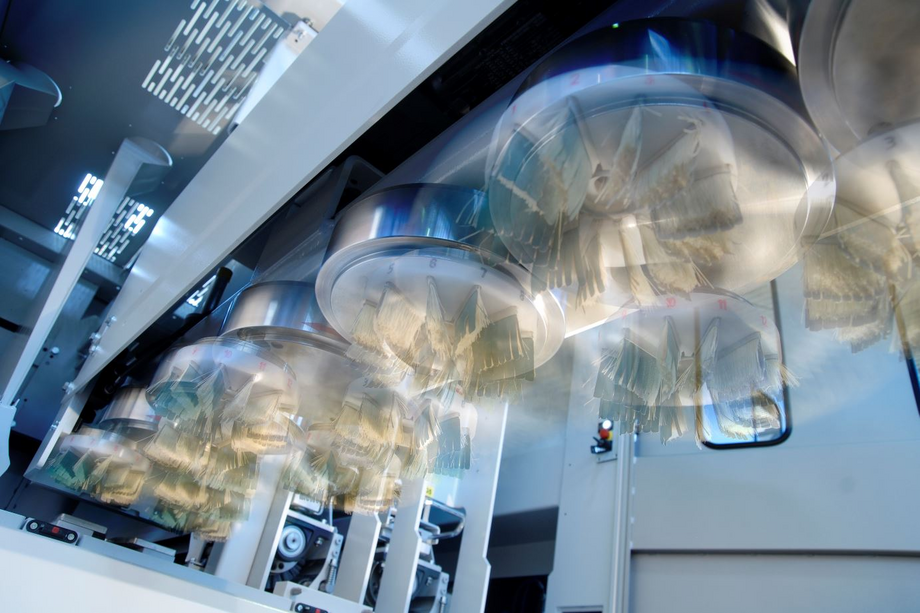
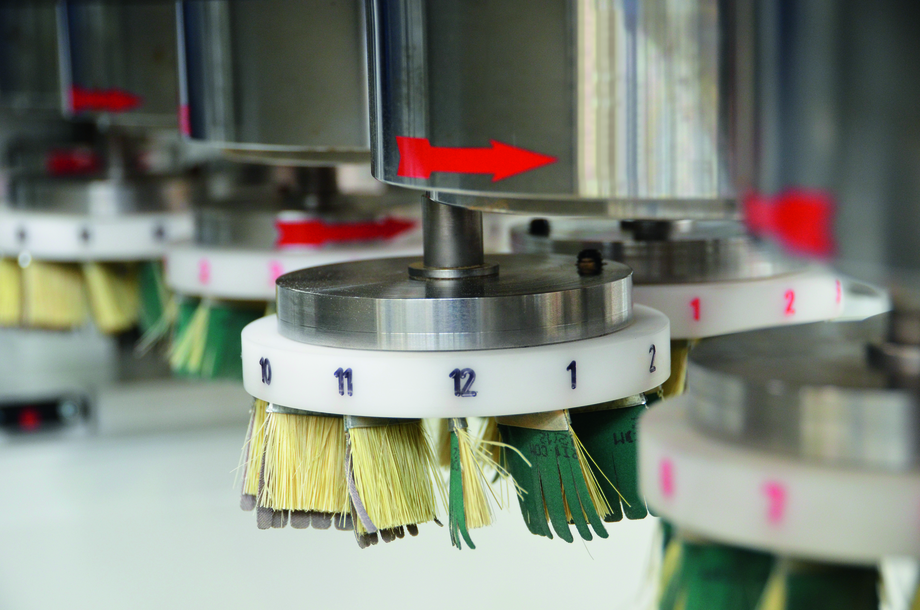
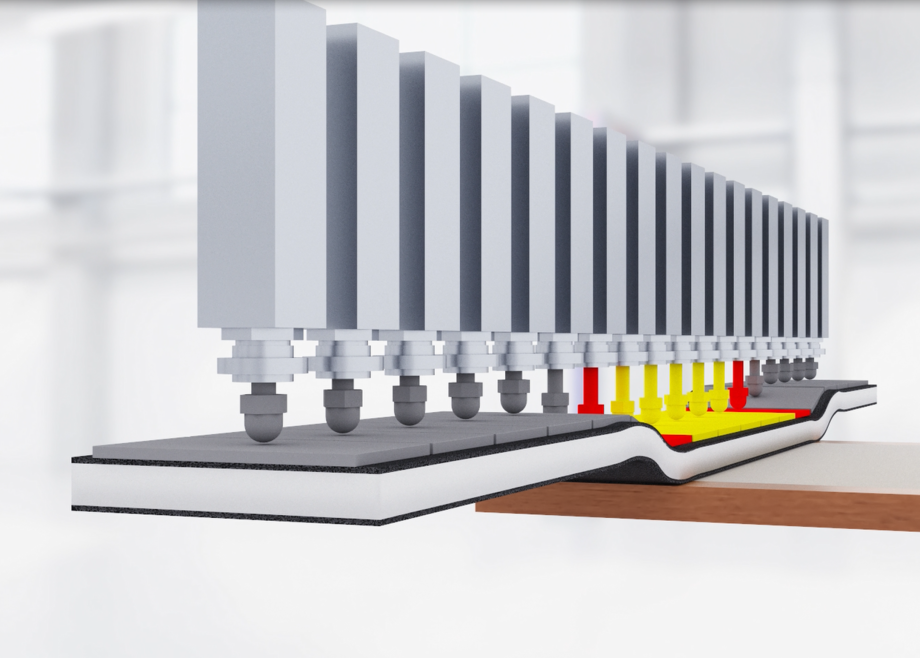
Consistent sanding pressure across both the surface and edges is essential for high-quality results. The WEBER ISD Link Pressure Beam uses freely movable pressure elements that are directly connected to the sanding lamella. They automatically adapt to the sanding belt, ensuring uniform pressure distribution along longitudinal and transverse edges while preventing unwanted lateral forces on the adjusting cylinders.
The integrated design eliminates the need for additional guides that can be susceptible to contamination, resulting in reliable, maintenance-free operation. Sanding pressure can also be individually adjusted across different areas of the workpiece.
This is particularly advantageous for intermediate lacquer sanding, where certain coating processes can cause excess lacquer to accumulate along the edges. Targeted pressure adjustment allows these areas to be sanded precisely without unnecessarily removing material from the rest of the surface.
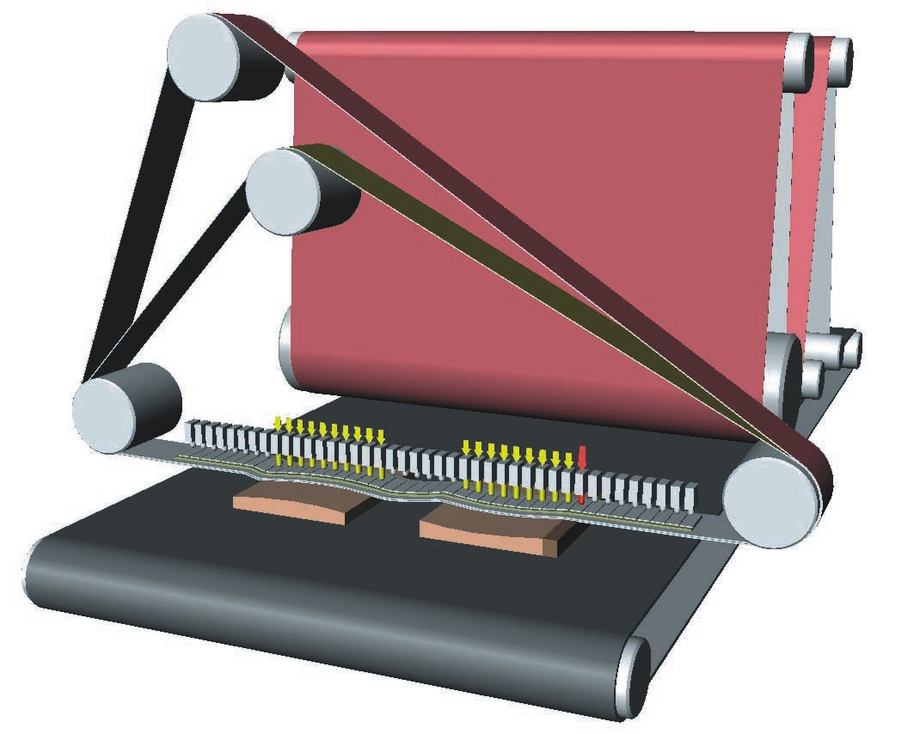
Cross sanding has been a proven WEBER technology for many years. The process begins with sanding across the feed direction, followed by finishing sanding along the length of the workpiece.
The cross belt operates at a 90° angle to the wood grain, effectively shearing off coarse wood fibers. The subsequent wide belt removes the remaining raised fibers and smooths the surface.
Compared with repeated longitudinal sanding, this crossing sanding process leaves significantly fewer and shorter fibers on the surface, resulting in a more uniform and refined finish.
Your advantages at a glance
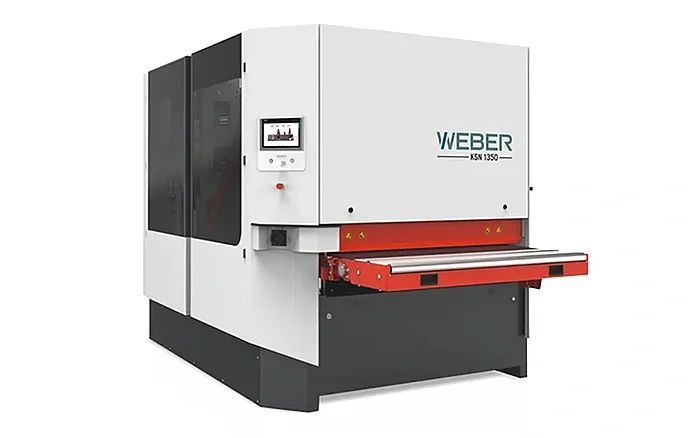
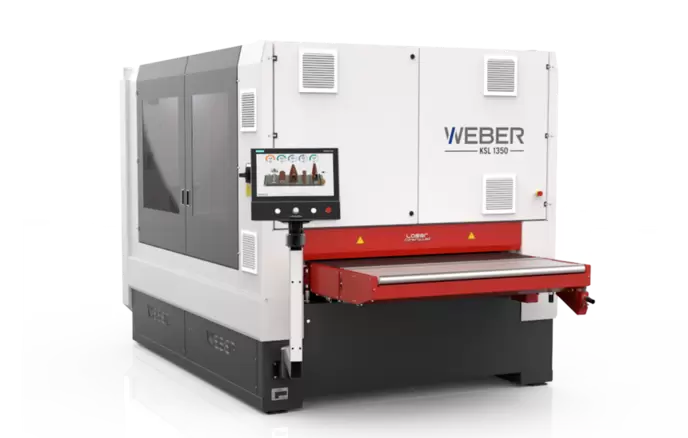
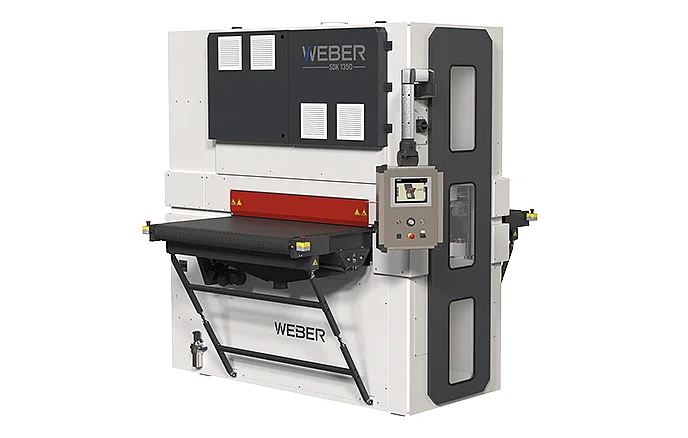
WEBER has developed three dedicated machine series for processing sheet materials. Their design is specifically adapted to the demanding requirements of industrial panel sanding and differs significantly from conventional sanding machines.
For veneer and plywood panels, sanding pad stations can be equipped with electronically controlled pressure beams for precise and consistent sanding pressure. The drives are separated from the machine frame and integrated into a dedicated unit, minimizing vibration transfer and helping to prevent sanding irregularities.
Das Wichtigste
Other series Wood sanding technology



Contact, Opening Hours, Locations
Solutions for the future - Contact us
Kontakt