WEBER sanding
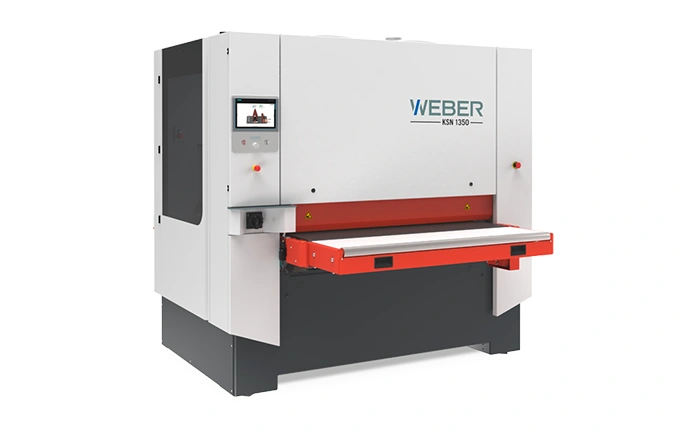
WEBER KSL
up to 8
sanding stations
2
different working widths
High performance and quick and easy processing of veneers and solid wood
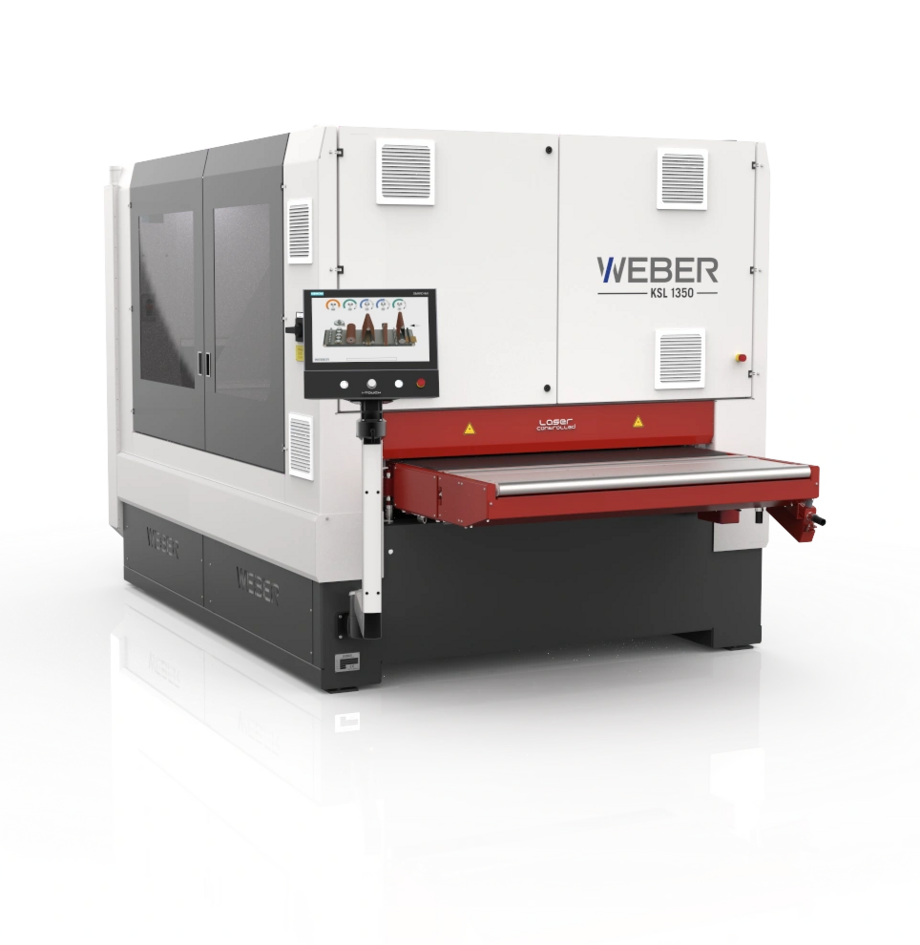
The WEBER KSL is a high-performance sanding machine designed for demanding industrial applications in veneer and solid wood processing. Its reinforced processing stations, contactless workpiece detection, and high-speed electronics are designed for reliable continuous operation.
With infinitely variable feed speeds and freely configurable sanding and brushing stations, the KSL can be precisely adapted to different production requirements. It also enables the creation of distinctive visual and tactile surface effects for demanding applications.
Technical specification
WEBER KSL
High-performance model for wood sanding, veneer sanding and lacquer sanding
- Arbeitsbreiten
- 1350 und 1600 mm
- Kalibrierwalzenantrieb
- bis 45 kW
- Schleifbandlänge
- 2620 mm
- Bedienung
- "i-Touch" Controller, Multi Panel
- Ausführung
- 1 bis 8 Schleifstationen, Anordnung fei wählbar
- Arbeitshöhe
- 900mm / 1050mm
- Vorschubgeschwindigkeit
- stufenlos
- Schleifaggregate
- + Hobelaggregat (H)
+ Kontaktwalzenaggregat (D)
+ Querbandaggregat (C)
+ Kissenaggregat (P)
+ Kombiaggregat (K)
+ CBF-Kombiaggregat (M)
+ Bürstaggregat (B)
+ Querbürstaggregat (Q)
+ Planetenkopfaggregat (P2)

WEBER processing stations
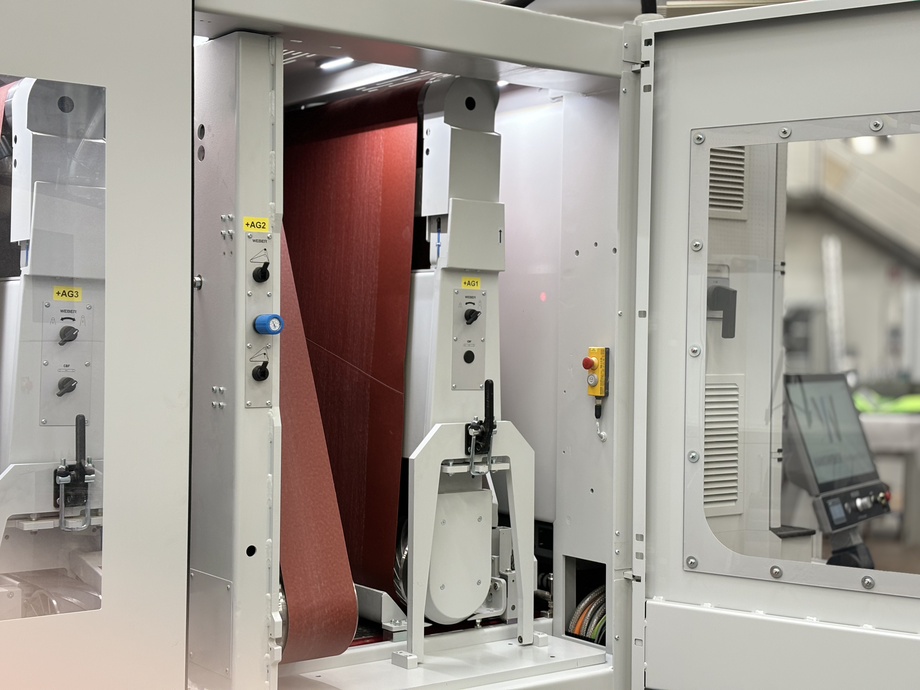
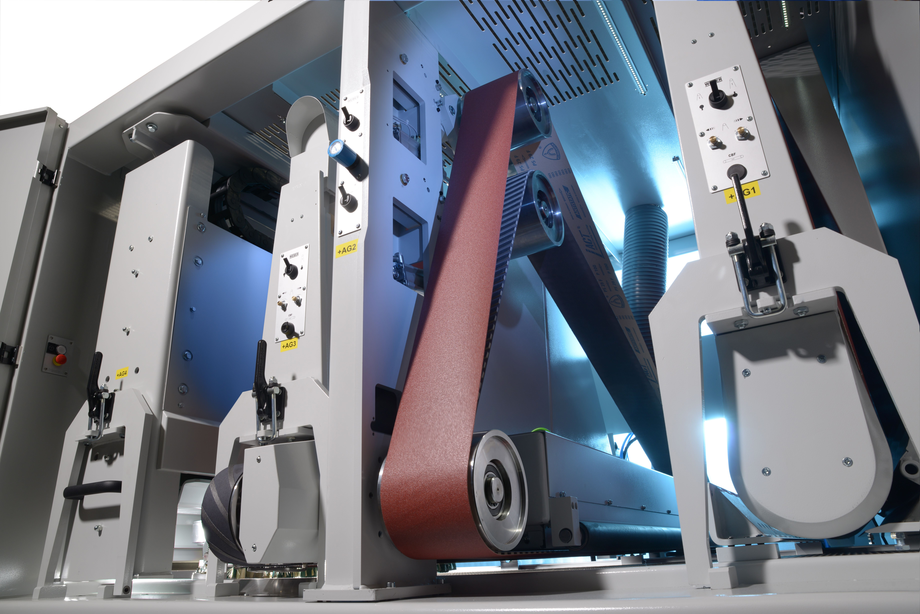
The KSL offers a comprehensive range of sanding and brushing stations, including WEBER planetary head technology. The vertically arranged bottom sanding stations provide easy access for quick and convenient sanding belt changes.
The sanding belts for the bottom stations use the same lengths as those in the top stations, simplifying handling, maintenance, and spare parts management.
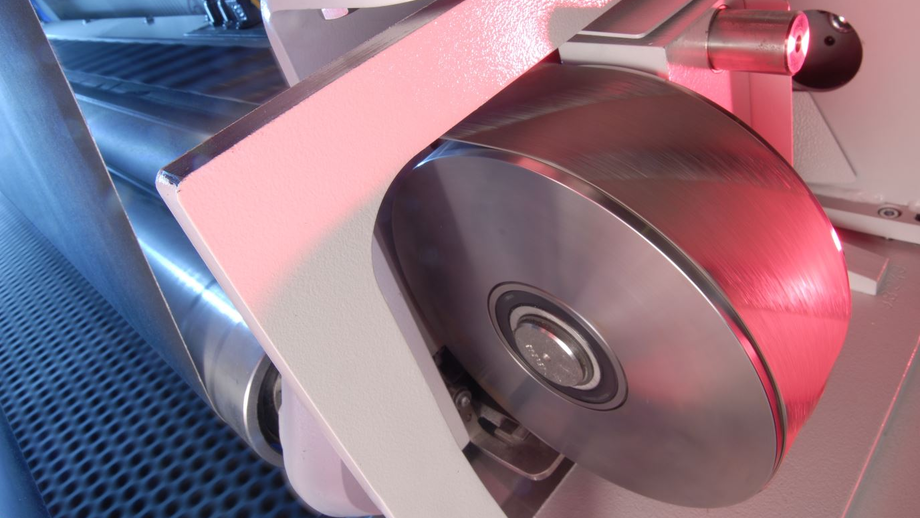
Available in steel or rubberized versions, WEBER contact rollers are designed for durability and reliable performance across a wide range of sanding applications. With adjustment accuracy down to 0.01 mm, they enable highly precise calibration for demanding sanding processes.
The rollers can also be used for various effect sanding applications, providing additional options for creating distinctive and individual wood surfaces.
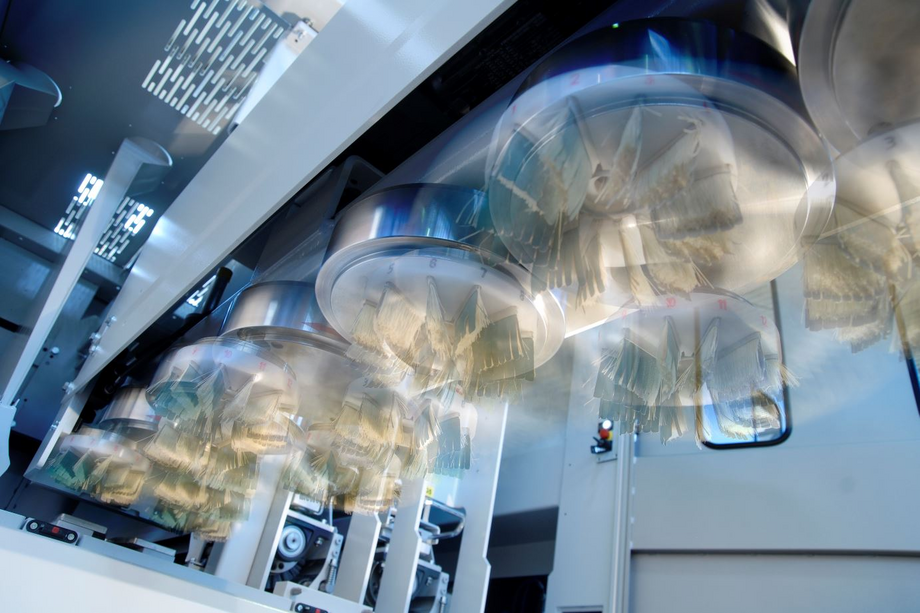
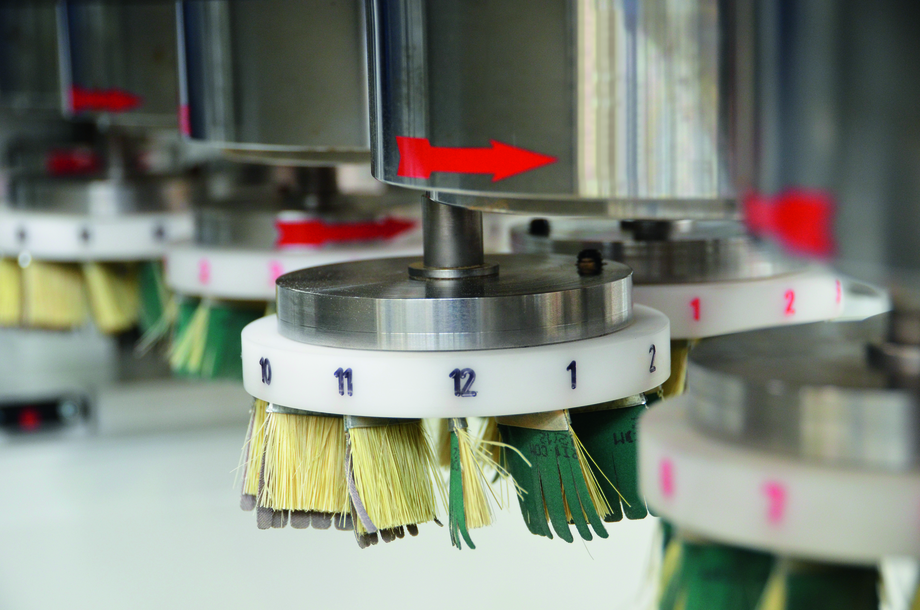
The patented WEBER planetary head delivers consistent surface finishing regardless of wood grain direction or workpiece geometry. Its multi-directional sanding action ensures uniform edge breaking during throughfeed processing and enables the reliable machining of 3D surfaces, radii, and profiles.
By processing wood fibers evenly in multiple directions, the planetary head minimizes fiber raising during subsequent lacquering. This can reduce paint consumption while improving the overall surface quality.
A smooth surface free from visible oscillation marks is a key indicator of high-quality sanding. WEBER CBF technology achieves this with a transverse pressure flap belt integrated into the wide-belt sanding station. The pressure flaps interrupt the contact between the abrasive grains and the workpiece, preventing the oscillation marks typically associated with conventional sanding belts.
The flap belt runs without a separate control system, maintains the full tolerance compensation of the link pressure beam, and wears evenly across its width. It is also quick and economical to replace.
Another advantage of CBF technology is that, unlike conventional cross sanding, one grit level can be skipped. This enables particularly fine sanding results while maintaining consistently high surface quality.
Ein Drehknopf mit dem Namen „i-Touch“ macht das Navigieren durch die wichtigsten Funktionen am farbigen Touchpanel einfach. Alle Schleifparameter wie z. B. Schleifbandgeschwindigkeit, Vorschubgeschwindigkeit und Werkstückdicke können per Direktzugriff am „i-Touch“ Controller bedient werden. In der Matrixdarstellung werden nur die für den aktuellen Betrieb notwendigen Informationen angezeigt. Neben den Hauptfunktionen ist ein direkter Zugriff auf die abgespeicherten Programme möglich. Der Bediener wählt lediglich die gewünschte Art der Bearbeitung aus. Die Maschine stellt sich mit nur einem Tastendruck komplett ein.
Ihre Vorteile auf einen Blick:
Die WEBER Schleifmaschinen sind standardmäßig mit einem hochwertigen Bedienterminal im Farbmodus ausgestattet, basierend auf der Siemens Steuerung. Dank der grafischen Bedienoberfläche gestaltet sich die Bedienung einfach und effizient. Sämtliche Einstellungen können am Bedienterminal vorgenommen und gespeichert werden. Eine Einbindung in übergeordnete Steuerung oder eine Verkettung mit anderen Maschinen ist problemlos möglich.
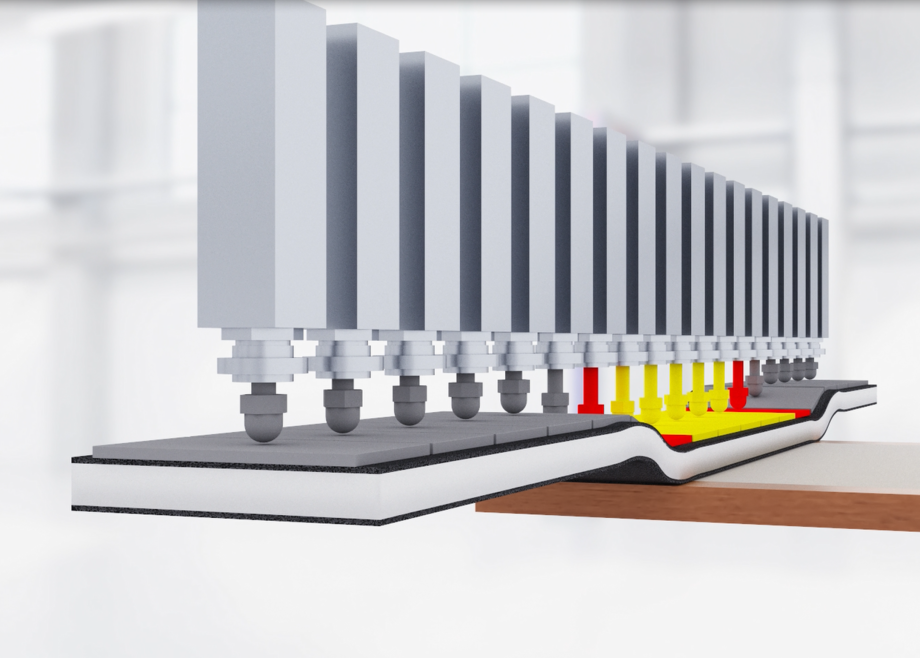
Uniform sanding pressure across the surface and edges is essential for consistent sanding results. The WEBER ISD link pressure beam uses freely movable pressure pieces connected directly to the sanding lamella. They automatically adapt to the sanding belt, ensuring even pressure distribution along longitudinal and transverse edges while avoiding unwanted lateral forces on the adjusting cylinders.
The integrated design eliminates the need for additional guides that can be susceptible to contamination, making the system highly reliable and maintenance-free. Sanding pressure can also be adjusted individually across different areas of the workpiece.
This is particularly beneficial for intermediate lacquer sanding, where excess lacquer can build up along the edges. By precisely controlling the sanding pressure, these areas can be processed effectively without unnecessarily removing material from the rest of the surface.
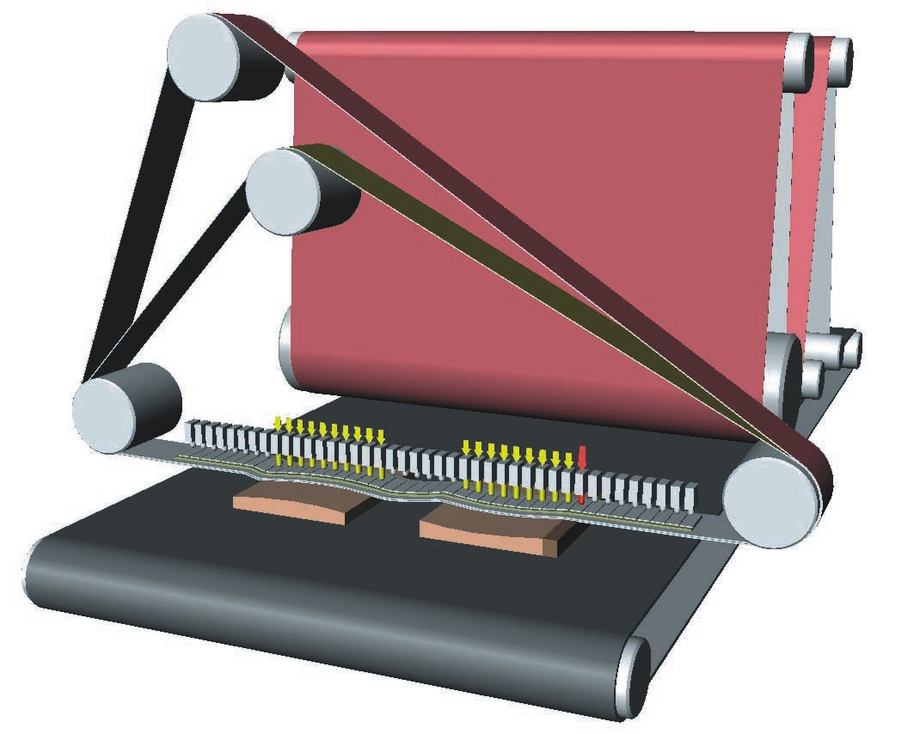
Cross sanding has been a proven WEBER technology for many years. The process begins with sanding at right angles to the feed direction, followed by finishing sanding in the longitudinal direction.
The cross belt works at 90° to the wood grain, effectively shearing off coarse wood fibers. The subsequent wide belt removes the remaining raised fibers and smooths the surface. This crossing sanding process leaves fewer and shorter fibers, resulting in a more uniform and refined surface.
Texturing brushes are used to create distinctive structures and textures on wooden surfaces. They selectively remove softer areas of the wood, enhancing the natural grain and creating a characteristic grooved surface.
Metal wire brushes are suitable for creating coarse structures, while abrasive plastic bristles and sanding brushes can be used for subsequent smoothing and refinement of the textured surface..
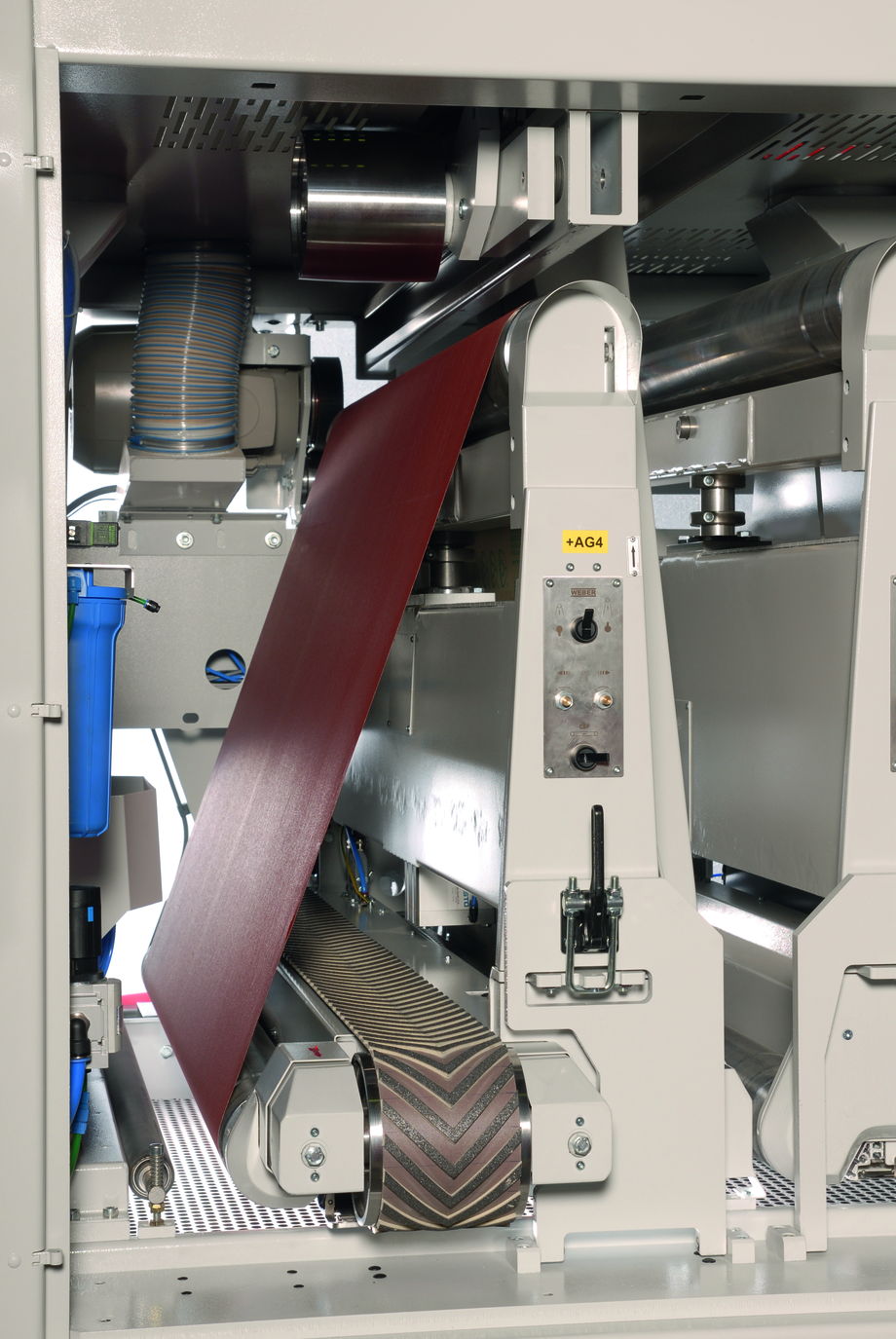
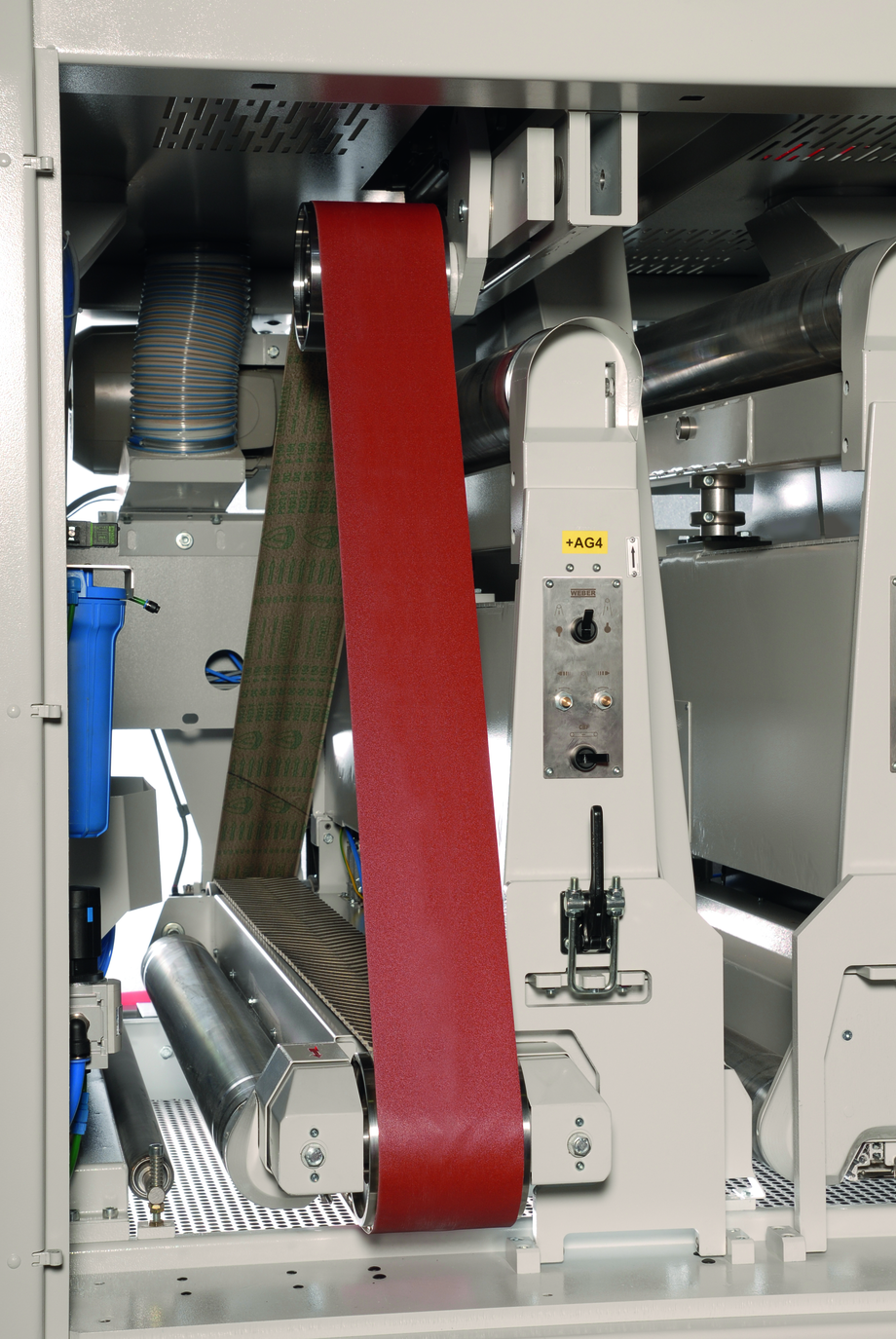
WEBER X-Sanding combines multiple sanding processes in a single, highly flexible sanding station. The unit can be quickly converted between wide-belt and cross-belt sanding, allowing calibration, longitudinal sanding, cross sanding, or WEBER CBF finishing to be performed as required.
This flexibility makes it possible to adapt the sanding sequence to different materials, surfaces, and lacquer requirements. Longitudinal or crosswise final sanding can also be performed in the same station, eliminating the need for an additional processing unit.
Precise workpiece detection is essential for sanding systems equipped with a link pressure beam. The contactless WEBER SCAN laser system continuously detects the entire working width without mechanical scanning elements, ensuring reliable operation with minimal maintenance.
The laser accurately detects workpiece tolerances of up to 2 mm and can also identify defined color-coded areas on the surface. In continuous production, it can additionally be used to detect quality variations at an early stage, helping maintain consistent processing results.
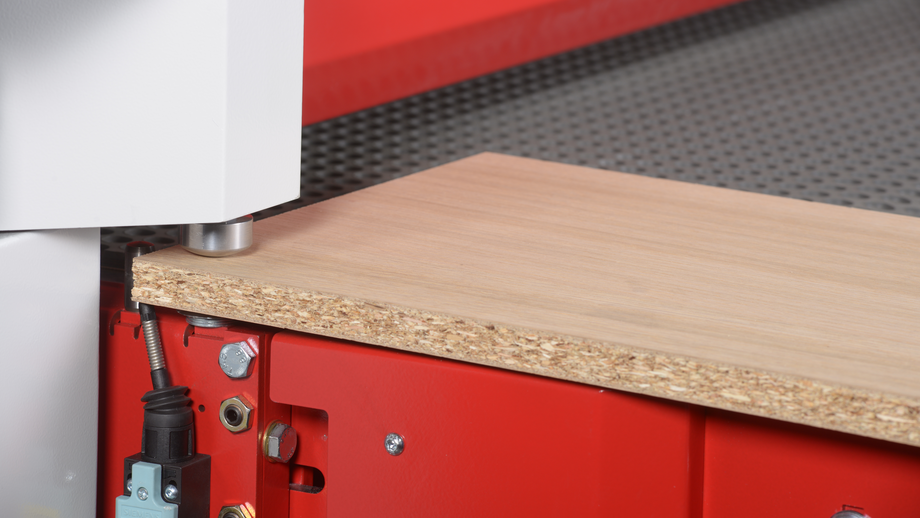
The advantages of the WEBER KSL 4-1350 wood sanding machine at a glance:
- Optimized for industrial mass production
- Feed rate infinitely adjustable up to 50 meters/hour'
- “Weber SLT”: automatic adjustment of the sanding belt
- Four work stations, can be installed in any order
- Quick and easy processing of veneers and solid wood
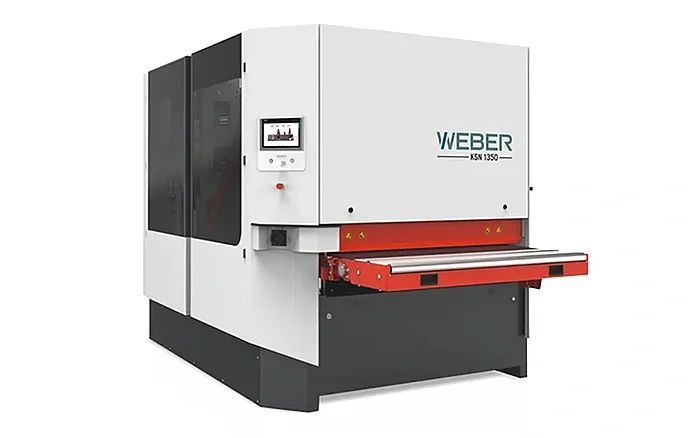
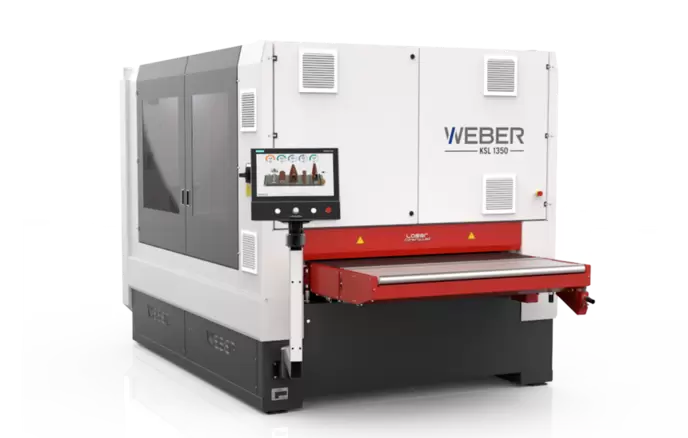
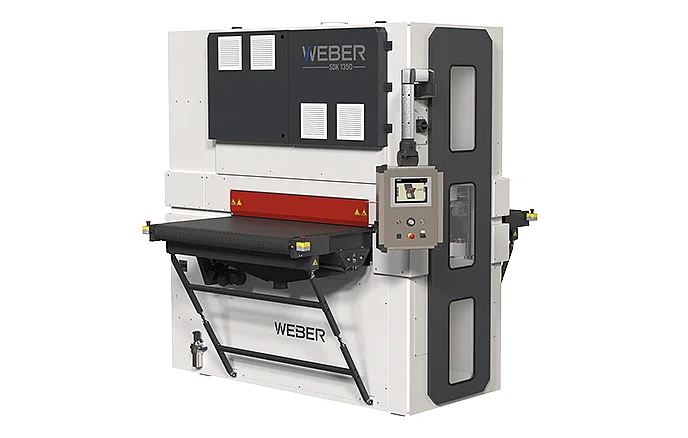
Other series Wood sanding technology



Contact, Opening Hours, Locations
Solutions for the future - Contact us
Kontakt